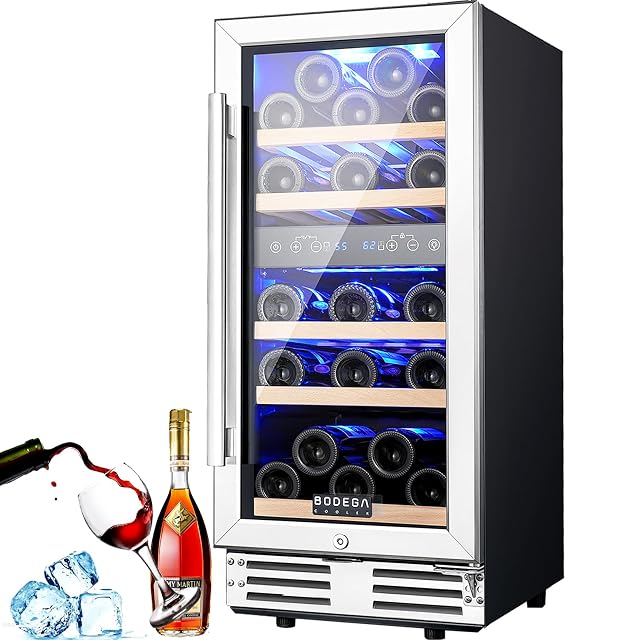
BODEGA 15-Inch 30-Bottle Dual Zone Wine Fridge
30 bottles · 2 zones · 41–68 °F · 15 in · front vent · sapele shelves
A narrow under-counter dual-zone fridge.
Best for: A 15 in cabinet opening
≈ $460
Wine coolers
Decide where it goes before what it holds. A built-in cooler needs front venting; a freestanding one needs air around it. Then choose capacity, zones and cooling.
Under a counter: front vent, like the BODEGA 15 in. Anywhere else: freestanding. See built-in vs freestanding.
From the BLACK+DECKER 8 to the Kalamera 46. Rated capacity assumes Bordeaux bottles.
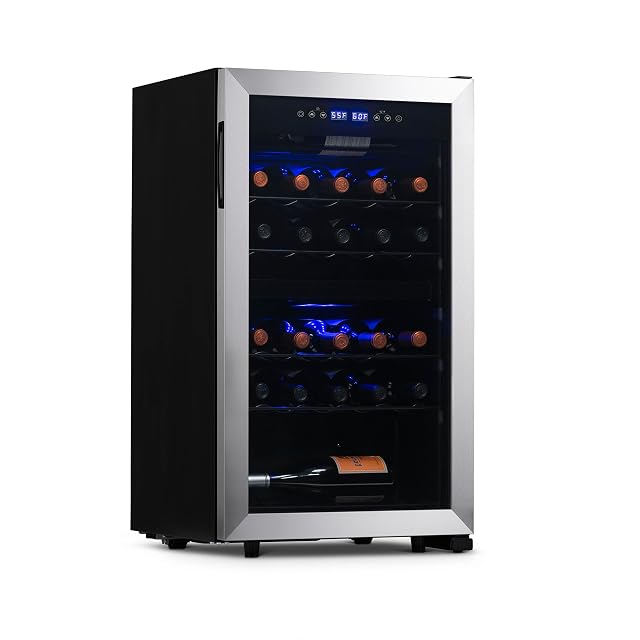
Reds and whites at once: two zones, like the NewAir 28. See single vs dual zone.
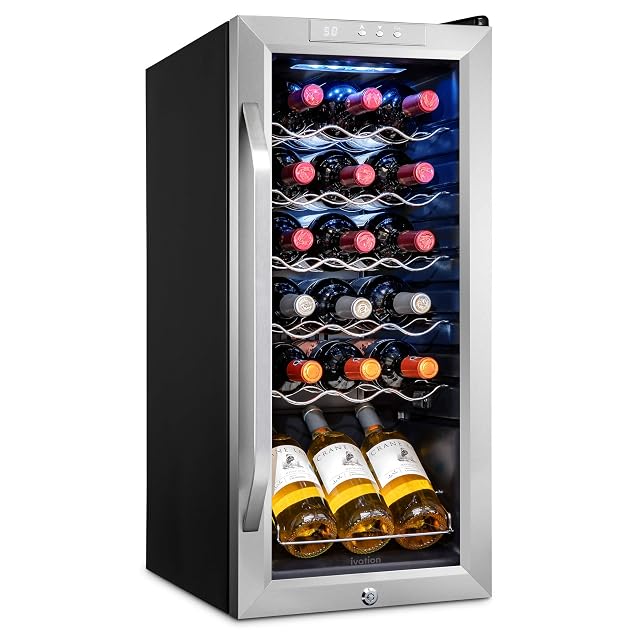
Warm room: compressor, like the Ivation 18. See compressor vs thermoelectric.
Few listings publish it. See wine cooler noise explained.
30 bottles · 2 zones · 41–68 °F · 15 in · front vent · sapele shelves
A narrow under-counter dual-zone fridge.
Best for: A 15 in cabinet opening
≈ $460
28 bottles · 2 zones 41–54 / 54–64 °F · compressor · 19 in
A dual-zone fridge with clearly split ranges for whites and reds.
Best for: Whites and reds at their own temperatures
≈ $314
18 bottles · 1 zone · 41–64 °F · compressor · fan · lock
A single-zone compressor cooler cold enough for sparkling wine, with a control lock.
Best for: A mixed collection of reds, whites and sparkling in one zone
≈ $310
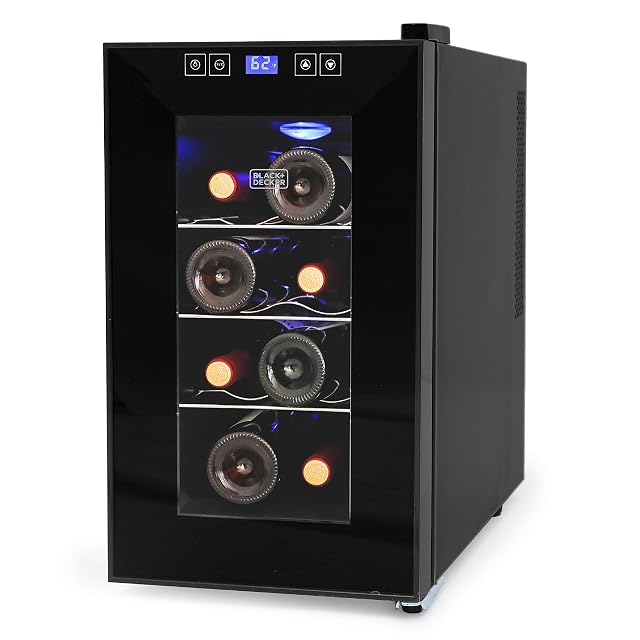
8 bottles · 46–65 °F · thermoelectric · triple-pane glass · 1-year warranty
A small, low-cost cellar with full dimensions.
Best for: A first small wine fridge
≈ $150
Larger than your current collection; see how many bottles fit.
See wine cooler vs beverage fridge.
Thermoelectric coolers have no compressor, so they are quiet, but they cool relative to the room and suit small cellars such as the 8-bottle BLACK+DECKER. Compressor coolers reach lower temperatures in a warm room and are used on larger and built-in units.
One zone keeps every bottle at the same temperature, which is enough for one style of wine. Two zones let whites sit colder than reds at the same time.
No. A built-in cooler needs a front vent; a freestanding one needs air around it. Check the installation line of the listing before fitting one under a counter.
Made for: A 15 in cabinet opening
Where it wins: Fits a 15 in gap
Where it loses: Per-zone ranges not split
Made for: Whites and reds at their own temperatures
Where it wins: Zone ranges published
Where it loses: Body text describes freestanding use; check venting before building in
Made for: A mixed collection of reds, whites and sparkling in one zone
Where it wins: Reaches 41 °F for sparkling wine
Where it loses: No noise figure published
Made for: A first small wine fridge
Where it wins: Low price
Where it loses: 8 bottles
$150 – $280
7 models
$300 – $400
9 models
What divides the bands: Capacity — Entry level 12 · Mid range 28 · Upper range 30
Spares and fittings from the same aisle, at the price we noted. Check they match the cabinet you choose before you order: it depends on the model and the part number, which the listing states.
One against one, already written up, for two cabinets from this guide or this aisle.
Every cabinet here comes from the catalog this site keeps. Specifications are those the manufacturer states and those printed on the Amazon listing; prices are the Keepa reading for the date below, and both change. Ranking rests on declared specifications, on stated strengths set against stated limits, and on price. No item here has been used in person, and nothing on the page suggests it has.
Last checked on
Prices quoted in these summaries are dated readings. The live price is shown next to each product.