Skip to content

The best electric wine aerators for 2026

An electric aerator does mechanically what pouring through a manual aerator or swirling a decanter does by hand — mixing air into wine as it passes through — at a claimed speed advantage the manufacturer's own flow-rate figure is the only real way to check. We compare stated flow rate where published, battery life against a mains-powered design, whether the unit is pour-through (fitted to the bottle neck) or drops into the bottle itself, and how the wine-contact parts are cleaned, since a unit that cannot be rinsed thoroughly is a genuine hygiene concern with a product reused on multiple bottles.

The models we recommend

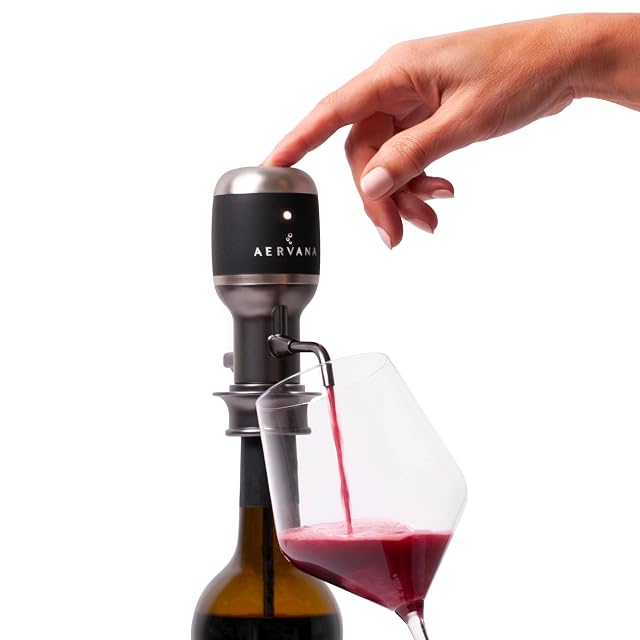
  1. Aervana Select

    Adjustable aeration dial · telescoping tube · US market only

    An adjustable electric aerator with a dial ranging from no aeration to roughly the equivalent of three hours in a decanter, and a telescoping tube fitting both standard and magnum bottles. Confirmed present on the US Amazon listing only, with no live EU offer and no confirmed price found at the time of checking.

    Best for: A US-based buyer specifically wanting adjustable aeration rather than a fixed-rate pour — this is not currently a well-confirmed option for European buyers.
    7.2/10

  2. MolaMolamoy MLKD7

    Electric aerator and dispenser, aerates in one second, 30+ bottles per Type-C charge, self-cleaning, ABS and 304 stainless

    An electric wine aerator and dispenser that aerates in a second and runs more than thirty bottles on a charge.

    Best for: Trying an electric aerator for the price of a bottle of wine

    ≈ $10

  3. HIGFRA SW-EA01

    One-touch electric aerator, airtight rubber seal, spout pourer without sediment, USB charging, self-cleaning in water

    A one-touch electric aerator with an airtight rubber seal and a self-cleaning cycle, charged over USB.

    Best for: One red wine drunk a glass at a time, where the pour should be clean and the device should clean itself

    ≈ $37

  4. HAGSCTA HAGSCTA

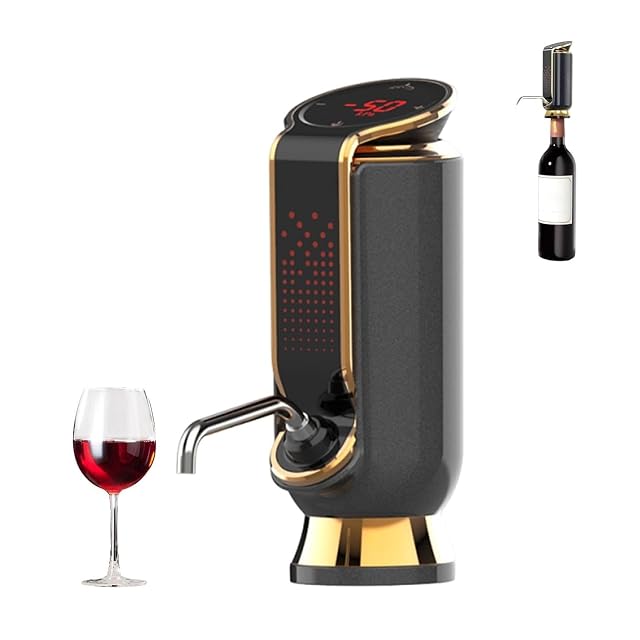
    Electric aerator and preserver, vacuum −40 to −50 kPa, LED showing volume, temperature and pressure, stainless channels, rechargeable

    An electric aerator and preserver holding a −40 to −50 kPa vacuum, with pour volume, temperature and pressure on screen.

    Best for: Opening a bottle over several evenings, where the vacuum and the temperature both need watching

    ≈ $86

  5. INQ MV7

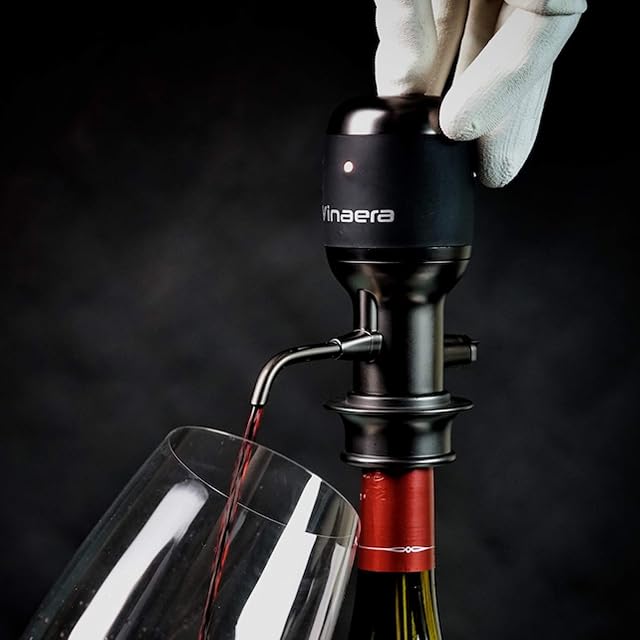
    Adjustable electric aerator, up to 3 hours of decanting equivalent, cleans in 10 s, 6 × AAA for 100+ bottles, telescopic tube, sediment filter, FDA compliant

    An adjustable electric wine aerator claiming the equivalent of three hours in a decanter, with a sediment filter and a telescopic tube.

    Best for: Someone who drinks more than one style of red and wants to aerate a young tannic wine differently from a delicate one

    ≈ $90

  6. NutriChef NCWQDASBK

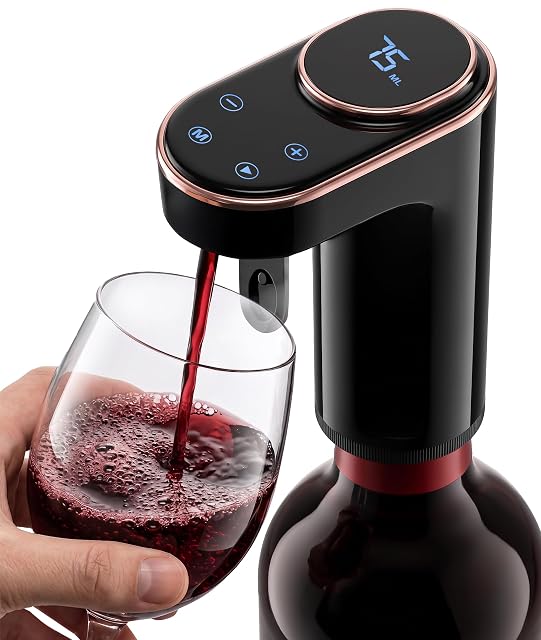
    3-in-1 aerate, vacuum seal and dispense; pours to 999 ml at 5% accuracy with auto-stop; necks 18–30 mm (0.71 to 1.18 in), bottles 165–385 mm (6.50 to 15.2 in); USB-C

    A three-in-one aerator, vacuum sealer and dispenser pouring to 999 milliliters at five per cent accuracy, with published bottle limits.

    Best for: Pouring measured glasses at a gathering, on bottles of several shapes, and sealing what is left

    ≈ $50

  7. Elmonte CJ2-01

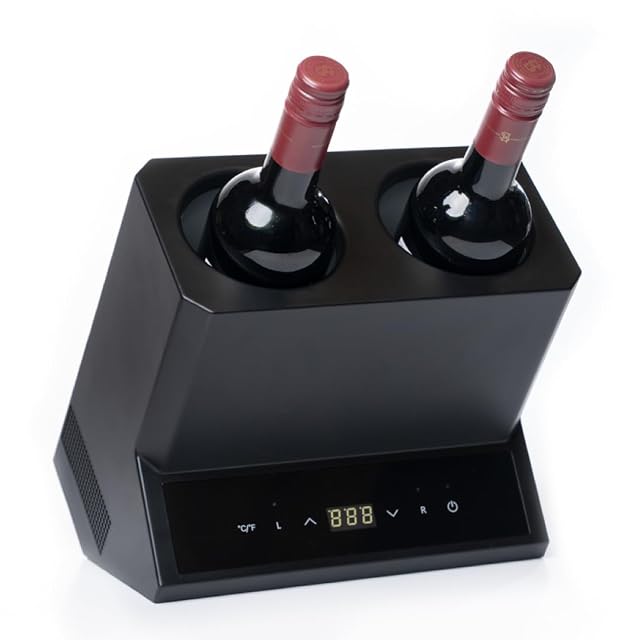
    2-bottle thermoelectric cooler, two independent chambers, 41–64 °F, standard 750 ml bottles, quiet and vibration free

    A two-bottle thermoelectric countertop cooler with independent chambers, adjustable from 41 to 64 °F.

    Best for: Holding one red and one white at their serving temperatures on a counter, with no ice and no vibration

    ≈ $170

The need before the model, across electric wine aerators

Fitting the neck of the bottle

An aerator too wide for the neck sits loose and sprays wine past the glass. The stated diameter, and the give of the seal, decide what works without staining the cloth.

Aervana Select

Serving a whole bottle without recharging

A battery aerator that stops at the fourth glass sends you back to the decanter. The stated runtime, converted into glasses, is the only figure that counts at the table.

MolaMolamoy MLKD7

Coming apart for rinsing

Tannin residue dries in the channel and flavors the next glass. The stated number of removable parts decides how clean it really is after three bottles.

Elmonte CJ2-01

Who buys what, across electric wine aerators

Young, tannic wines
Aeration softens the tannins of a wine that has not had time to open. The case where the effect is clearest.
Immediate service
An aerator works glass by glass, without waiting for a decanter to do its work. A real time-saver.
Older wines
Violent aeration can drive off the fragile aromas of an old wine. There, careful decanting is preferable.

Nothing is free: the trade-offs of electric wine aerators

Speed against finesse
An electric aerator oxygenates violently and in seconds; a decanter works slowly and lets the wine evolve. The result is not the same.
Glass by glass against the whole bottle
The aerator treats what you pour and leaves the rest untouched; the decanter commits the whole bottle.
Appliance against decanter
The electric one has to be cleaned, charged and can break down. A decanter does none of that and takes time.

Buyers’ questions on electric wine aerators

Does aeration really change the wine?

On a young, tannic wine, the effect is generally noticeable in tasting. On a wine already open, it is more discreet.

Should every wine be aerated?

No. Old, fragile wines can lose their aromas to violent aeration, and many whites gain nothing from it.

Aerator or decanter?

The aerator is fast and works glass by glass; the decanter acts slowly and lets the wine evolve. Not the same results.

How long should wine sit in a decanter?

From a few minutes to an hour depending on the wine. There is no general rule, and tasting regularly is the only reliable method.

How do I clean an electric aerator?

Rinse immediately with clean water after use, without immersing the electric unit. Wine dried in a narrow channel is very hard to remove.

Can the device rescue a corked wine?

No: cork taint is not removed by aeration. A frequent confusion.

Decant or aerate?

Decanting is first about separating the sediment of an old wine; aerating is about opening a young one. Two different acts.

Is an aerator suitable for white wine?

On a young, sharp white, aeration erases part of what you came for. It mostly makes sense on rich, reduced whites, not on a light everyday wine.

What to take away from electric wine aerators

Aeration opens a young, tannic wine, and can strip the aromas from an old one. Decanting and aerating are two distinct acts — one separates the sediment, the other oxygenates — and neither rescues a corked bottle.

The gist of electric wine aerators, at a glance

    Electric wine aerators, side by side

    There is no table here, and the reason is in the listings. The figure published most often across these 7 products is cleaning, given by 4 of them — short of the four in five a column needs to compare rather than to display gaps. Each product page says what its own maker published.

    Where each budget lands on this shelf

    Lower range

    $10 – $37

    2 models

    MolaMolamoy MLKD7, HIGFRA SW-EA01

    Mid range

    $50 – $86

    2 models

    NutriChef NCWQDASBK, HAGSCTA

    Upper range

    $90 – $170

    2 models

    INQ MV7, Elmonte CJ2-01

    Sources, and how we work

    Specifications: manufacturer sheets for bar and wine appliances and the matching Amazon product pages. Prices and availability: Keepa.

    Most recent revision in this category: October 4, 2026.

    What we look at on electric wine aerators

    Prices quoted in these summaries are dated readings. The live price is shown next to each product.