Skip to content

The best single-zone wine coolers for 2026

A single-zone cooler holds every bottle inside it at the same target temperature, which makes the real question not "how cold" but how evenly and how stably it holds that number as a room warms up around it. Thermoelectric units are quiet and vibration-free but track ambient temperature more closely — a hot kitchen in summer can push the cabinet several degrees above its setpoint. Compressor units hold a target regardless of the room, at the cost of a low compressor hum. We compare rated bottle capacity against the maker's own measurements, the stated temperature range, cooling technology, UV-blocking glass, and vibration — a real concern for long-term storage, not just serving temperature.

The models we recommend

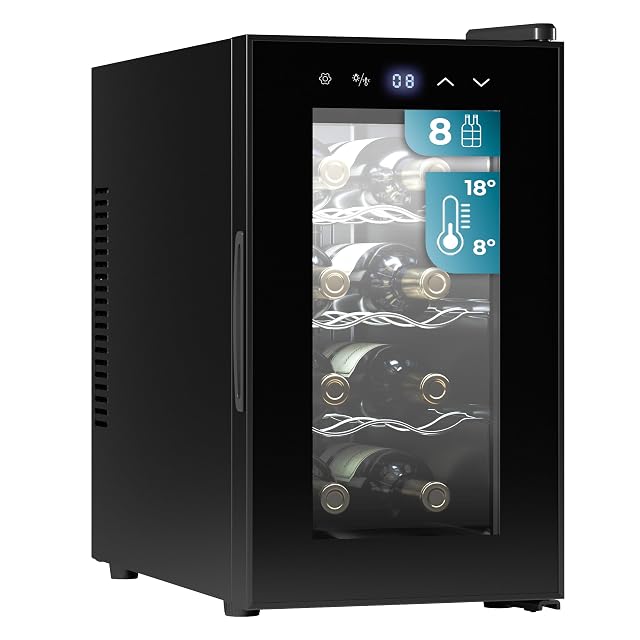
  1. Cecotec Bolero Grandsommelier 830 CoolCrystal

    8 bottles · 1 zone · 8–18 °C (46 to 64 °F) · thermoelectric

    An 8-bottle thermoelectric single-zone cooler with a touch control panel, interior LED and a non-toxic refrigerant gas stated on the listing. The same ASIN and EAN are confirmed live on Amazon.es, .fr, .it and .de.

    Best for: A budget single-zone cooler for a cool room or a climate-controlled flat, where thermoelectric cooling's lower price outweighs its sensitivity to ambient heat.
    7.2/10

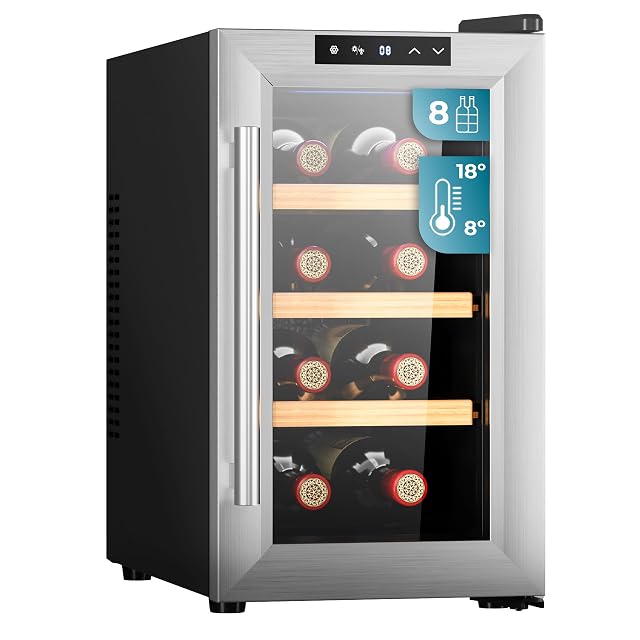
  2. Cecotec Bolero Grandsommelier 830 CoolWood

    8 bottles · 1 zone · 8–18 °C (46 to 64 °F) · thermoelectric

    The wood-finish variant of Cecotec's 8-bottle Bolero Grandsommelier 830, described on the listing as low noise and high performance. Same thermoelectric cooling and capacity as the CoolCrystal finish, confirmed on the same four EU markets.

    Best for: The same cool-room, budget single-zone use case as the CoolCrystal finish, for a buyer who prefers a wood-look cabinet over a glass one.

    7.2/10

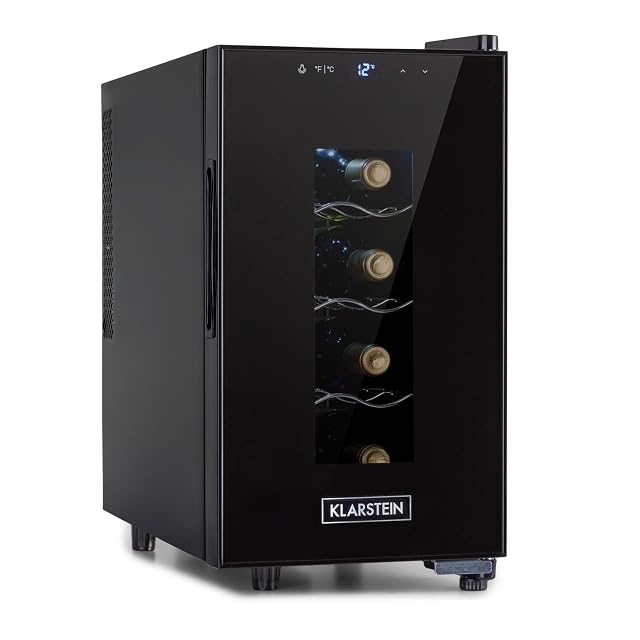
  3. Klarstein Bellevin

    8 bottles · 1 zone · 11–18 °C (52 to 64 °F)

    An 8-bottle freestanding single-zone cooler with a UV-protective glass door, LED interior lighting and a touch panel. The same ASIN and EAN are listed, in stock, on Amazon.de, .fr, .it and .es.

    Best for: A first wine cooler for a small kitchen or apartment, where 8 bottles at one temperature is enough and the priority is price over capacity.

    7.2/10

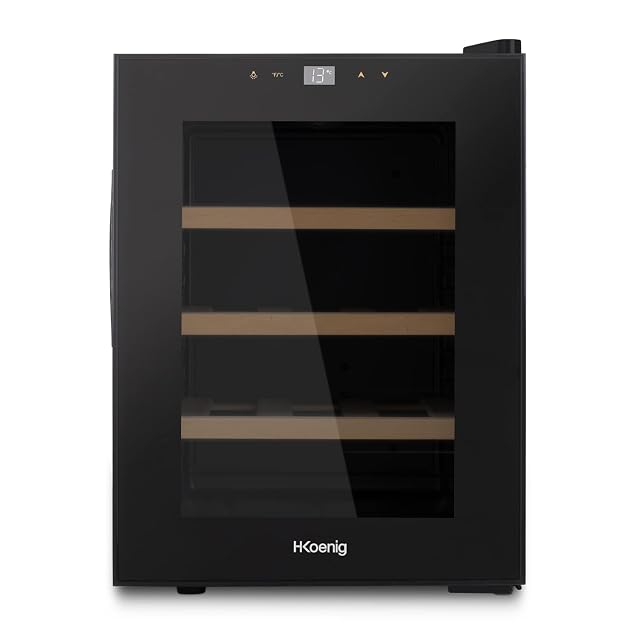
  4. H.Koenig AGE12

    12 bottles · 1 zone · thermoelectric · stainless steel

    A 12-bottle, 31-liter thermoelectric cooler in a professional-look stainless steel cabinet, with wood shelving and interior lighting. The temperature range differs slightly between markets on the listings checked, worth confirming before buying.

    Best for: A buyer who wants a stainless steel, professional-styled cooler at 12-bottle capacity and is comfortable double-checking the exact temperature range on their own market's listing before ordering.

    7.8/10

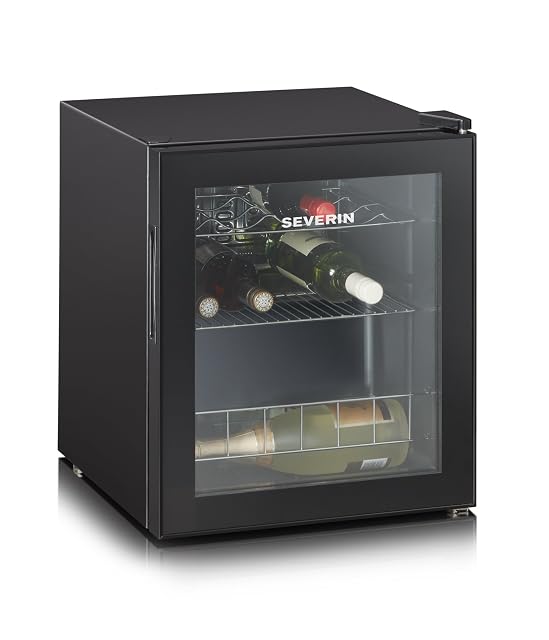
  5. Severin KS 9889

    15 bottles · 1 zone · 4–18 °C (39 to 64 °F) · compressor, 43 dB

    A 15-bottle, 46-liter compressor cooler with automatic defrost and a stated 43 dB noise level. The same ASIN and EAN are confirmed live on Amazon.fr, .de, .it and .es, though energy class G and 147 kWh/year running cost are worth weighing against the price.

    Best for: Someone who wants a compressor cooler's temperature stability and a genuinely cold lower range, and is willing to pay more upfront and in running costs than a thermoelectric model.

    7.8/10

The need before the model, across single-zone wine coolers

Building up a reserve

The stated bottle capacity assumes standard Bordeaux bottles laid flat. A cabinet always fills up faster than you expect.

Severin KS 9889

Keeping a few bottles at temperature

A small cabinet slips under a worktop and draws less. For serving rather than keeping, it is amply enough.

Cecotec Bolero Grandsommelier 830 CoolCrystal

Who buys what, across single-zone wine coolers

Serving
A single-zone cabinet set to one type of wine's temperature is enough when you mainly serve one color. The most frequent case.
Keeping
Temperature stability counts for more than its exact value. Repeated swings are what tires a bottle.
Open-plan kitchen
Noise becomes decisive in a living space. Compressor cabinets are more effective and noisier than thermoelectric models.

Nothing is free: the trade-offs of single-zone wine coolers

Stated capacity against real capacity
The figure assumes standard bottles neatly arranged. With Burgundy or champagne bottles, expect markedly fewer.
Compressor against thermoelectric
The compressor goes lower and holds better in a warm room, with vibration and noise. Thermoelectric is silent and follows the ambient temperature.
Single zone against versatility
One temperature suits if you store one type of wine. Serving white and red at their own temperature calls for two zones or a permanent compromise.

Buyers’ questions on single-zone wine coolers

Is the stated capacity realistic?

It assumes standard Bordeaux bottles laid flat. With wide formats, the real capacity drops appreciably.

Compressor or thermoelectric?

The compressor holds the temperature even in a warm room and vibrates; thermoelectric is silent and partly follows the ambient.

Should bottles be laid flat?

For cork stoppers, yes: contact with the wine keeps the cork damp. Screw caps do not require it.

Where should a wine cabinet go?

Out of direct sunlight, away from a heat source, with the ventilation clear. A cabinet built in without provision for ventilation overheats.

Is vibration a problem?

Over long keeping it is generally considered unfavourable. Compressor models on anti-vibration mounts limit it.

Do I need a UV-treated door?

Light is unfavourable to wine. Treated glass or a solid door protects against an exposure you do not always think about.

What temperature should I set?

A steady temperature counts for more than its exact value. Repeated swings are what tires a bottle most.

Does a wine cabinet replace a real cellar?

It reproduces the thermal stability, without the thermal mass or the natural humidity. For a few years' keeping, it does the job very well.

What to take away from single-zone wine coolers

The stated capacity assumes standard bottles: expect fewer with wide formats. Temperature stability counts for more than its exact value, and the location — clear ventilation, no direct sun — decides the real performance.

The gist of single-zone wine coolers, at a glance

  • Highest figure for capacity: Severin KS 9889 (15 bottles (0.75 L), 46 L net).
  • Highest figure for temperature range: Klarstein Bellevin (11–18 °C (52 to 64 °F)).

A comparison of single-zone wine coolers

A column is kept only when four references in five publish the figure. A gappy column suggests a comparison that does not exist.

ModelPriceCapacityTemperature rangeZonesCooling technology
Cecotec Bolero Grandsommelier 830 CoolCrystal—8 bottles (0.75 L)8–18 °C (46 to 64 °F)1Thermoelectric
Cecotec Bolero Grandsommelier 830 CoolWood—8 bottles (0.75 L)8–18 °C (46 to 64 °F)1Thermoelectric
H.Koenig AGE12—12 bottles (0.75 L), 31 L11–18 °C (52 to 64 °F) on the DE and FR listings checked; the ES listing states 8–18 °C (46 to 64 °F) — confirm on the specific market before buying1Thermoelectric
Klarstein Bellevin—8 bottles (0.75 L)11–18 °C (52 to 64 °F)1 (single temperature for the whole cabinet)Not published — check listing before assuming compressor or thermoelectric
Severin KS 9889—15 bottles (0.75 L), 46 L net4–18 °C (39 to 64 °F)1Compressor, with automatic defrost

The guides devoted to single-zone wine coolers

Sources, and how we work

Specifications: manufacturer sheets for bar and wine appliances and the matching Amazon product pages. Prices and availability: Keepa. Every figure in this table names its source.

Most recent revision in this category: August 25, 2026.

What we look at on single-zone wine coolers