Skip to content

The best compact beer dispensers for 2026

This family runs on sealed, pre-filled kegs rather than a bulk keg and a separate CO2 tank, which is what lets the whole unit sit on a countertop or in a fridge door instead of a garage corner. The trade-off is brand lock-in: a dispenser built for one capsule system only accepts that system's own kegs, and the beer selection is whatever that maker's catalog currently lists, not an open market. We compare which keg system a unit is built for, cooling time from room temperature, how long the maker states the beer stays fresh once tapped, footprint, and cost per liter against the keg range on offer.

The models we recommend

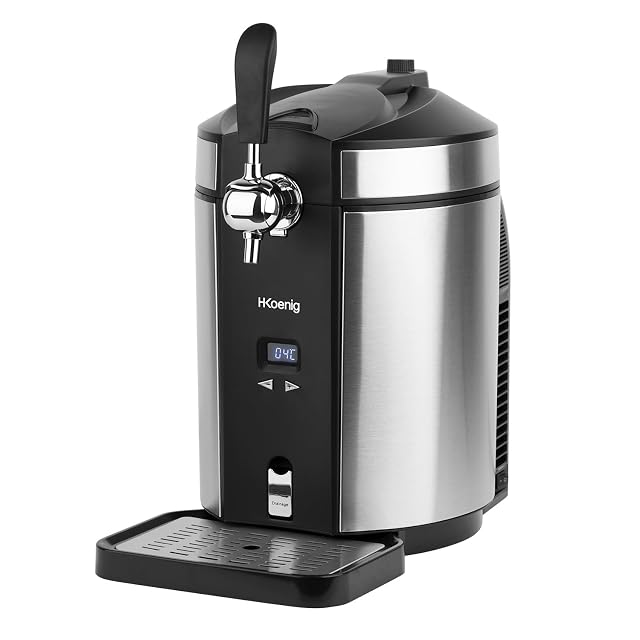
  1. H.Koenig BW1880

    5 L universal kegs · pressurized or non-pressurized · 2–12 °C (36 to 54 °F)

    A stainless steel dispenser built for universal 5-liter kegs rather than one proprietary system, with adjustable cooling between 2 and 12 °C (54 °F). Confirmed live with real pricing on Amazon.de and .fr, at roughly half the price of the officially licensed Krups Beertender.

    Best for: A budget-conscious buyer who wants flexibility across multiple keg brands rather than a single licensed beer catalog, and is comfortable confirming keg compatibility themselves before buying.
    7.8/10

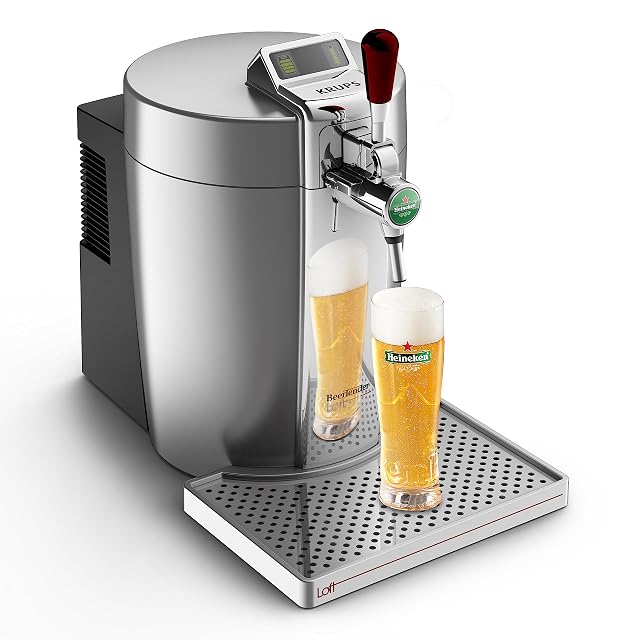
  2. Krups Beertender Loft Edition

    5 L Heineken keg system · cools to 4 °C (39 °F) · 30-day freshness

    The official Heineken-licensed dispenser, built around a 5-liter sealed keg system with a stated 4 °C (39 °F) serving temperature and 30-day freshness once tapped. Confirmed on Amazon.de and .fr with real pricing, though noticeably more expensive than the H.Koenig universal-keg alternative in this family.

    Best for: A household committed to the Heineken beer family who values official licensing and wants concrete temperature and freshness figures over the lower price of a universal-keg alternative.

    8.4/10

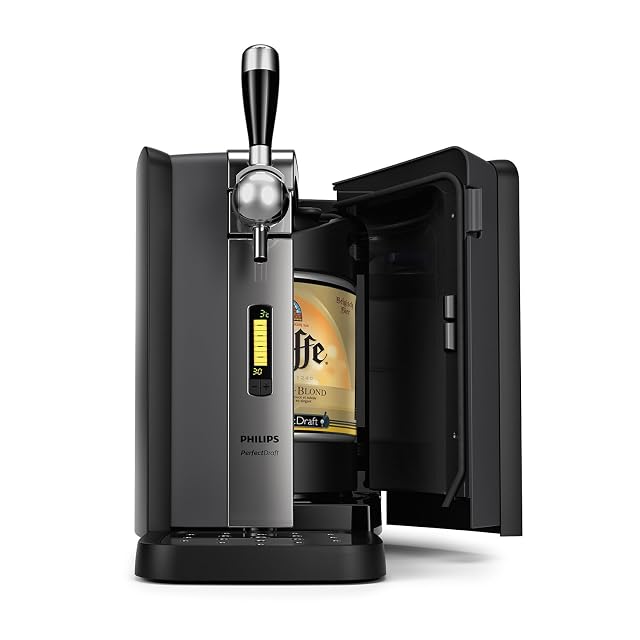
  3. Philips PerfectDraft HD3720/25

    6 L sealed keg · PerfectDraft system · LED display

    A compact dispenser built around Philips' own 6-liter sealed keg system, with an LED display for temperature and remaining volume. The same ASIN is confirmed live with real stock on Amazon.de, .fr, .it and .es — the strongest cross-market match found in this family.

    Best for: A household that wants draft beer from a fridge-sized appliance without a CO2 cylinder or a commercial keg, and is comfortable with a closed keg catalog in exchange for that convenience.

    8.4/10

Who buys what, across compact beer dispensers

Occasional entertaining
A compact dispenser comes out for the occasion and gets put away. The format's most common use.
Regular enthusiast
The compatible keg system decides which beers you can get, far more than the appliance itself.
A dispenser that fits on a worktop
These appliances take up a whole worktop with the keg in place. Bulkier than they look in photographs.

Nothing is free: the trade-offs of compact beer dispensers

Proprietary system against choice of beers
An appliance tied to a single keg format limits the available catalog. The structural constraint here, before any technical criterion.
Compactness against capacity
A small keg empties fast and is easily replaced; a large format lasts an evening and calls for a bulkier appliance.
Fast cooling against waiting
These appliances need several hours to bring a keg down to temperature. Not something you plug in at the last minute.

Buyers’ questions on compact beer dispensers

How long before serving?

Several hours to bring the keg to temperature, longer if it arrives at room temperature. Not a last-minute appliance.

Are kegs compatible across brands?

Rarely: most appliances are tied to a proprietary format. That is what limits the choice of beers available.

How long does an opened keg last?

It depends on the system: kegs kept under pressure last several weeks, others a few days. The instructions give the figure.

Why so much foam?

Beer not cold enough, keg shaken, or pouring too fast. Tilting the glass to forty-five degrees at the start solves a large part of the problem.

Does the appliance need cleaning?

After every keg, with the kit provided. An uncleaned circuit develops residues that spoil the taste of the next beer.

Does a beer dispenser use much power?

It cools continuously while plugged in. Many users only leave it running during use.

Can an opened keg be served later?

Depending on the system, yes, provided the cold chain and the pressure are maintained. A keg warmed then cooled foams more.

Can the unit be used without a keg, as a fridge?

The usable volume is shaped around a keg and takes almost nothing else. A machine of this kind does not stand in for a small fridge, even out of season.

What to take away from compact beer dispensers

The keg system decides your choice of beers far more than the appliance: that is the constraint to weigh first. Allow several hours to bring it to temperature, clean the circuit after every keg, and tilt the glass to control the foam.

The gist of compact beer dispensers, at a glance

  • Highest figure for keg system: Philips PerfectDraft HD3720/25 (PerfectDraft 6 L sealed keg (proprietary — not compatible with other systems)).

A comparison of compact beer dispensers

A column is kept only when four references in five publish the figure. A gappy column suggests a comparison that does not exist.

ModelPriceKeg system
H.Koenig BW1880—Universal 5 L kegs, pressurized or non-pressurized, stainless steel
Krups VB700E00—Heineken 5 L sealed keg (proprietary — not compatible with other systems)
Philips PerfectDraft HD3720/25—PerfectDraft 6 L sealed keg (proprietary — not compatible with other systems)

The guides devoted to compact beer dispensers

Sources, and how we work

Specifications: manufacturer sheets for bar and wine appliances and the matching Amazon product pages. Prices and availability: Keepa. Every figure in this table names its source.

Most recent revision in this category: August 25, 2026.

What we look at on compact beer dispensers