Skip to content

The best single-zone wine cooler for 2026

All three coolers here are confirmed with real stock and pricing on multiple EU markets. What separates them is cooling technology — thermoelectric against compressor — and the capacity and price that come with each.

The cheapest way in

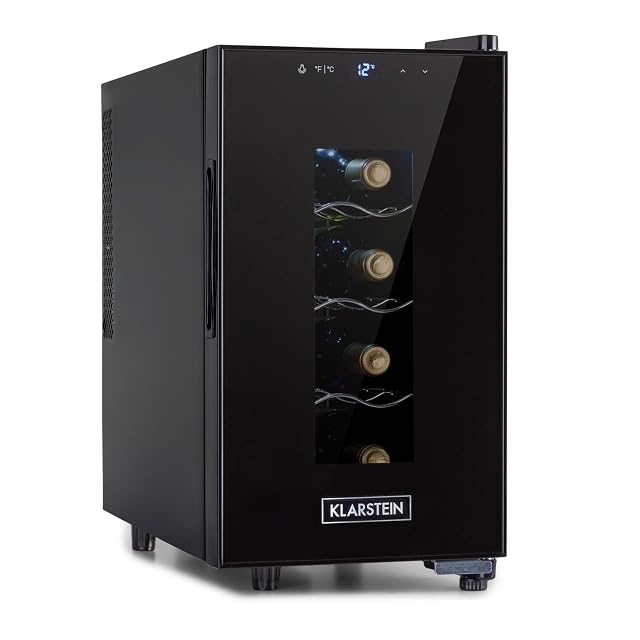
The Klarstein Bellevin is first for a small collection and a tight budget. At 8 bottles and confirmed live with real stock on all four EU markets checked, it’s the least expensive genuinely cross-market cooler in this family — the trade-off is that Klarstein doesn’t state whether it cools by compressor or thermoelectric module.

A stainless steel step up

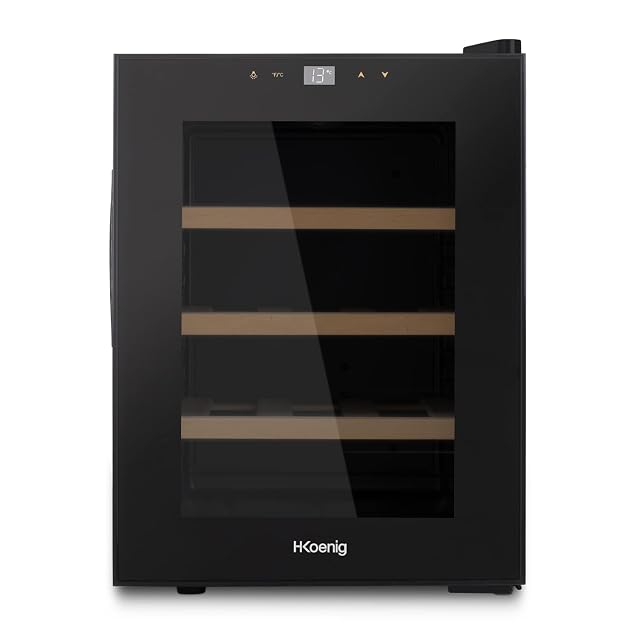
The H.Koenig AGE12 sits in the middle on both capacity and price, in a stainless steel cabinet with wood shelving. One real caveat: its temperature range differs between the DE/FR listing (11–18 °C (52 to 64 °F)) and the ES listing (8–18 °C (46 to 64 °F)) for the identical ASIN — worth checking directly on the market you’re buying from.

Compressor stability, at a real cost

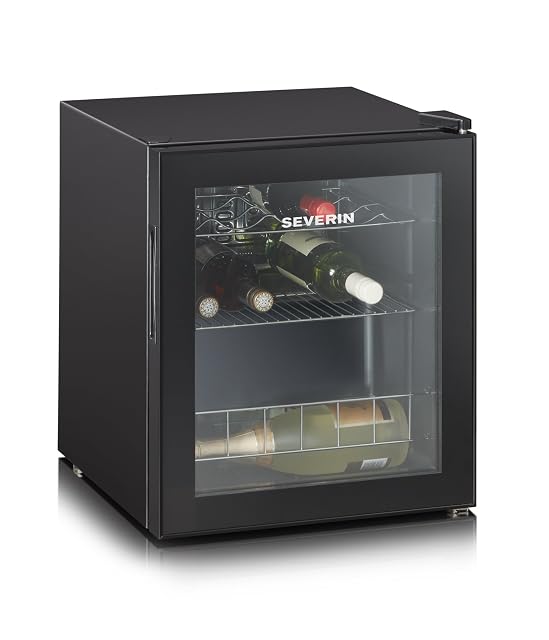
The Severin KS 9889 is the pick for anyone who wants compressor-based temperature stability rather than a thermoelectric module’s sensitivity to room heat. It holds a genuinely cold 4 °C (39 °F) lower bound and publishes a 43 dB noise figure, at roughly the price of the H.Koenig and a real ongoing energy cost — its EU energy label states class G, 147 kWh a year.

What we would not do

Buy a thermoelectric cooler for a warm kitchen or a room with real seasonal temperature swings. Neither the Bellevin nor the Cecotec coolers reviewed on this site state their cooling technology plainly enough to promise stability there — the Severin’s compressor is the safer bet for that specific situation.

Which cabinet suits your collection?

You keep a few bottles to drink within the year
A service cabinet is enough: it brings wine to drinking temperature, it does not age it.
You want to keep bottles for several years
You need an aging cabinet: held humidity, absence of vibration and a very steady temperature matter more than capacity.
Your room is cool and even
A thermoelectric cabinet can do, and stays silent, provided the gap with ambient remains modest.
Your room is warm or swings a lot
A compressor becomes necessary: thermoelectric only pulls down a limited amount below ambient.

Picking by what you store

Serving at the right temperature

The commonest and simplest use: keeping a few bottles ready. Steadiness matters, not depth of cold.

Holding a small reserve

A few dozen bottles to rest for a year or two. Absence of vibration and darkness become criteria.

Open-plan kitchen

Noise and rejected heat get noticed. A compressor in a living space is heard mostly at night.

Cellar or garage

Low temperatures pose the reverse problem: many cabinets cannot warm, and wine freezes sooner than people think.

The few numbers that decide it

Thermoelectric or compressor
The first is silent, vibration-free, and only pulls down a limited amount below ambient. The second goes lower and holds better, at the cost of noise and vibration. It is the first decision.
The real temperature range
A wide quoted range does not say at what ambient it is held. A cabinet in a kitchen at twenty-eight degrees will not come down as it does in a laboratory.
The climate class
It states the ambient range the appliance is built for. A cabinet placed outside its class runs hard, cycles and ages fast.
The quoted bottle capacity
It is counted with standard Bordeaux bottles, packed tight. With Burgundy or Champagne bottles the real number drops sharply.
The door
Glass looks good and lets light in; solid protects better. UV-treated glass changes that trade-off.

Which number for which collection

Your needThe technologyWhat to accept
Serving a few bottlesThermoelectricA limited pull-down below ambient
Keeping for yearsCompressor, aging cabinetNoise and vibration
Living spaceQuiet compressor or thermoelectricA compromise on range
Cool outbuildingA cabinet with a winter functionA rarer model

The traps to dodge

Confusing service and aging cabinets
The first brings to temperature, the second conserves. A service cabinet held at twelve degrees for five years does not replace an aging one, for want of humidity control.
Trusting the quoted bottle count
It is calculated with one format, optimally racked. A varied collection takes far more room than the spec sheet suggests.
Pushing the cabinet against a wall
The appliance sheds heat at the back or underneath. With no clearance it runs continuously and never reaches setpoint.
Building in a freestanding cabinet
A cabinet not designed for building in rejects heat at the back; enclosed in cabinetry it overheats and wears out. It is a question of ventilation, not of dimensions.

By the kind of host you are

The regular drinker
A modest service cabinet, quiet, in a temperate room. The commonest and simplest case.
The beginning collector
A compressor cabinet with humidity control and sliding shelves, placed away from living rooms.
The small flat
A compact, quiet model, accepting that it brings wine to temperature rather than keeping it.

Care, servicing and how long it keeps going

A wine cabinet needs little but suffers from neglect: the door seal deforms, the rear grille clogs with dust, and the condensate tray becomes a source of smell. No lifespan can be quoted: it depends above all on ventilation around the appliance.

  • Dust the grille and condenser, at the back or underneath, once or twice a year.
  • Check the door seal: a tired seal makes the appliance run without end.
  • Clean the inside with plain water, no scented product that wine would pick up.
  • Leave clearance around the cabinet, including behind a built-in model.

Safety

Nothing dangerous, but a heavy appliance full of glass that gives off heat.

  • Secure or wedge a tall narrow cabinet, especially with loaded shelves.
  • Transport and let it stand upright before first switching on.
  • Dedicated socket: a compressor starts with an inrush current.
  • Do not store cleaning products beside it: wine picks up smells through the cork.

Our choices, and what drove them

  1. Klarstein Bellevin

    8 bottles · 1 zone · 11–18 °C (52 to 64 °F)

    An 8-bottle freestanding single-zone cooler with a UV-protective glass door, LED interior lighting and a touch panel. The same ASIN and EAN are listed, in stock, on Amazon.de, .fr, .it and .es.

    Best for: A first wine cooler for a small kitchen or apartment, where 8 bottles at one temperature is enough and the priority is price over capacity.
    7.2/10

  2. H.Koenig AGE12

    12 bottles · 1 zone · thermoelectric · stainless steel

    A 12-bottle, 31-liter thermoelectric cooler in a professional-look stainless steel cabinet, with wood shelving and interior lighting. The temperature range differs slightly between markets on the listings checked, worth confirming before buying.

    Best for: A buyer who wants a stainless steel, professional-styled cooler at 12-bottle capacity and is comfortable double-checking the exact temperature range on their own market's listing before ordering.

    7.8/10

  3. Severin KS 9889

    15 bottles · 1 zone · 4–18 °C (39 to 64 °F) · compressor, 43 dB

    A 15-bottle, 46-liter compressor cooler with automatic defrost and a stated 43 dB noise level. The same ASIN and EAN are confirmed live on Amazon.fr, .de, .it and .es, though energy class G and 147 kWh/year running cost are worth weighing against the price.

    Best for: Someone who wants a compressor cooler's temperature stability and a genuinely cold lower range, and is willing to pay more upfront and in running costs than a thermoelectric model.

    7.8/10

What readers ask us

Should I pay more for a compressor cooler?

Only if the cooler will sit somewhere warm — a compressor holds its target temperature regardless of the room, while a thermoelectric cooler like the Bellevin or Cecotec models drifts warmer as ambient heat rises. In a genuinely cool room, the price difference may not be worth it.

Is 8 bottles enough for a first cooler?

For a small collection at one shared temperature, yes — the Bellevin is the cheapest confirmed entry point in this family. Anyone expecting the collection to grow past 8-10 bottles quickly should look at the H.Koenig AGE12's 12-bottle capacity instead.

What temperature for a service cabinet?

It depends what you drink: whites and sparkling are served cooler than reds. A single-zone cabinet forces a compromise, and that is exactly the format's limit.

Does a wine cabinet use much electricity?

It depends mostly on the gap with room temperature and on how well it is insulated. A cabinet in a warm room uses far more than the same one in a cool one.

Should bottles lie down?

For long storage with a cork, yes: the cork stays damp and keeps its seal. For a few days of service, position does not matter.

Does vibration harm wine?

Over a long keep, vibration is held to disturb the wine's evolution. In a service cabinet emptied within weeks, the question does not arise.

Can a cabinet go in a garage?

Only if its climate class allows it and it can warm when it freezes. Most cabinets only cool, and winter then becomes the real problem.

Does a glass door harm the wine?

Light, and ultraviolet in particular, degrades wine over time. Treated glass greatly limits the problem; a solid door removes it.

Each cabinet, and the collection it fits

Klarstein Bellevin

Made for: A first wine cooler for a small kitchen or apartment, where 8 bottles at one temperature is enough and the priority is price over capacity.

Where it wins: Same ASIN and EAN confirmed live on all four EU markets checked, with real stock and pricing on each

Where it loses: Klarstein does not publish whether cooling is compressor-based or thermoelectric on this listing — a real gap, since that decides how well it holds temperature in a warm kitchen

Read the full review →

H.Koenig AGE12

Made for: A buyer who wants a stainless steel, professional-styled cooler at 12-bottle capacity and is comfortable double-checking the exact temperature range on their own market's listing before ordering.

Where it wins: Stainless steel, professional-styled cabinet at a mid-range price point, distinct from the plastic-trimmed coolers elsewhere in this family

Where it loses: The temperature range differs between the DE/FR listing (11–18 °C (52 to 64 °F)) and the ES listing (8–18 °C (46 to 64 °F)) for the identical ASIN — a genuine inconsistency to check directly before buying rather than a typo we can resolve here

Read the full review →

Severin KS 9889

Made for: Someone who wants a compressor cooler's temperature stability and a genuinely cold lower range, and is willing to pay more upfront and in running costs than a thermoelectric model.

Where it wins: Compressor cooling with a genuinely wide 4–18 °C (39 to 64 °F) range, colder than most thermoelectric rivals at this capacity

Where it loses: Energy class G with a stated 147 kWh/year is a real ongoing cost to weigh against the purchase price

Read the full review →

What goes with it

Spares and fittings from the same aisle, at the price we noted. Check they match the cabinet you choose before you order: it depends on the model and the part number, which the listing states.

If you want it in a sentence

Pairings worth a look

One against one, already written up, for two cabinets from this guide or this aisle.

How this page was put together

Every cabinet here comes from the catalog this site keeps. Specifications are those the manufacturer states and those printed on the Amazon listing; prices are the Keepa reading for the date below, and both change. Ranking rests on declared specifications, on stated strengths set against stated limits, and on price. No item here has been used in person, and nothing on the page suggests it has.

Last checked on

Prices quoted in these summaries are dated readings. The live price is shown next to each product.

The tool we use ourselves

Chosen your tool? Now buy it at the right price.

Wine coolers and built-in cellars swing by fifty dollars or more across the year, and the biggest "discounts" often land at prices the same model sold for six weeks earlier. UniverTrack tracks the real price history across retailers, spots fake reductions, and alerts you when it is genuinely the moment to buy.

Real price historyBuy-now alertsAI buying assistant
Try free for 14 days →
No commitment · Cancel in one click · 5 languages