Skip to content

The best compact beer dispenser for 2026

Every dispenser here locks you into one keg catalog or opens up to universal kegs. That choice — not the hardware — is what actually decides which one to buy.

The most consistently available option

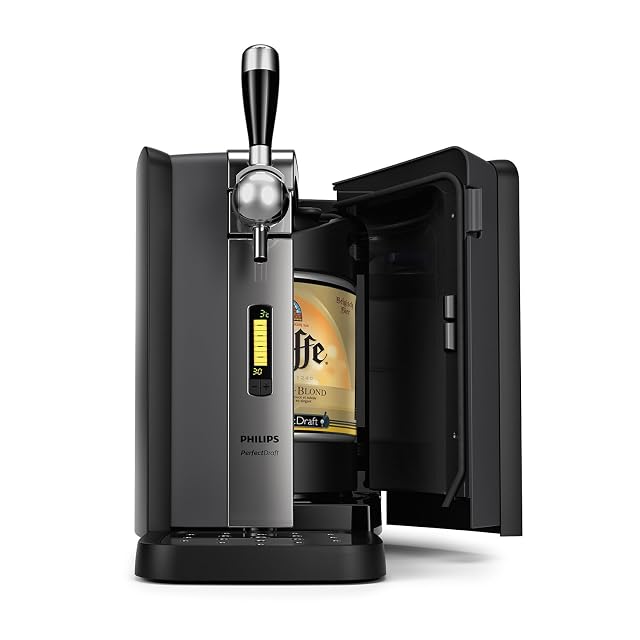
The Philips PerfectDraft HD3720/25 is first for the simplest reason: it’s the single most consistently confirmed product researched across this entire site — identical ASIN, real stock, and the same price on Amazon.de, .fr, .it and .es. The trade-off is a closed keg catalog.

The budget, universal-keg pick

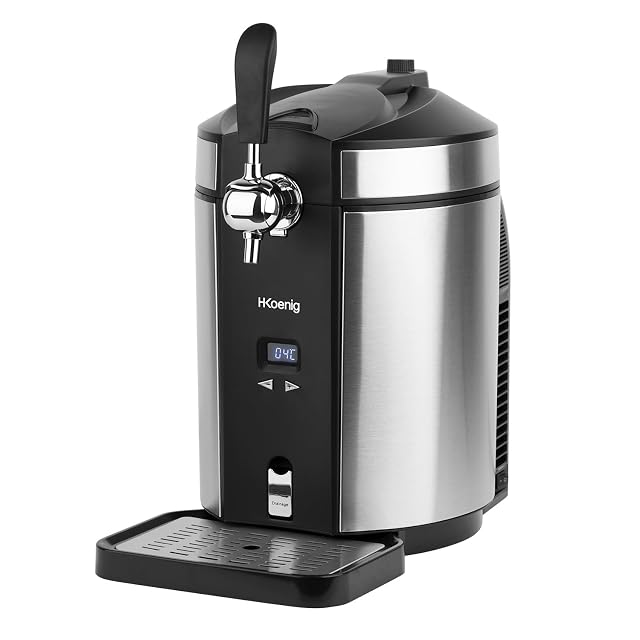
The H.Koenig BW1880 costs roughly half the PerfectDraft and opens up to universal 5 L kegs rather than one brand’s catalog, with an adjustable 2–12 °C (36 to 54 °F) range. Confirm a specific keg’s fit before buying — “universal” is a marketing term, not a guarantee.

The officially licensed option

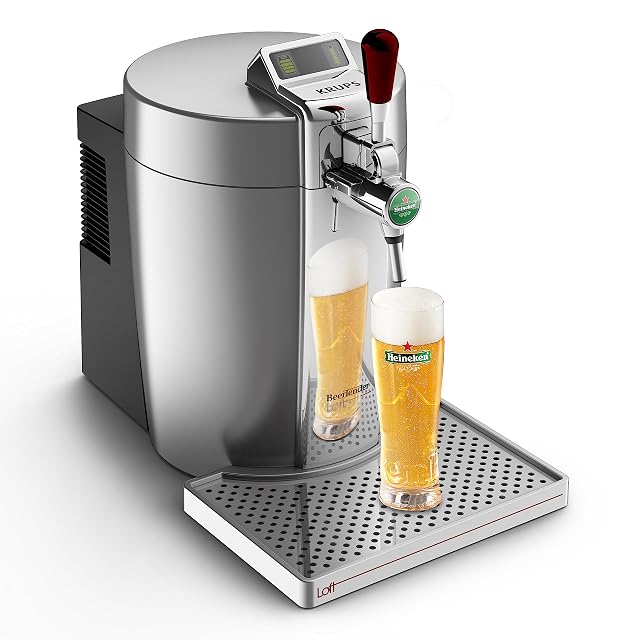
The Krups Beertender is the pick for a household set on Heineken-family beers specifically, with concrete 4 °C (39 °F) serving temperature and 30-day freshness figures. It’s the most expensive of the three, and wasn’t confirmed live on Amazon.it or .es at the time of checking.

What we would not do

Buy a compact dispenser expecting to mix and match kegs across brands. Every keg format in this comparison — PerfectDraft, Heineken/Krups, and H.Koenig’s universal system — is locked to its own dispenser design.

Which cabinet suits your collection?

You want the widest choice of beers
Look first at the keg format it takes: that, not the machine, decides what you will be able to drink.
You drink one particular brand
A proprietary system can be defended, provided you accept being tied to its catalog and its prices.
You entertain often
Keg capacity and cooling time become the real criteria: a dispenser that runs dry mid-evening is no use.
You want the fewest constraints
A disposable pressurized keg removes the gas bottle and the deep clean, at the cost of choice and price per liter.

Picking by what you store

Drinks at home

A few glasses, decent pressure, no preparation. That is what these machines are for.

Entertaining regularly

Available volume and cooling speed lead. A broached keg with a drink-by window becomes a subject in itself.

Discovering breweries

That assumes a system open to standard kegs, which most consumer appliances do not allow.

Décor and pleasure

Part of the appeal is visual. That is legitimate, as long as you know the cost per liter will exceed bottles.

The few numbers that decide it

The keg format
The criterion that governs all the others. A proprietary format limits choice and fixes the price; a standard format opens the catalog but usually demands more equipment.
How pressure is provided
Gas cartridge, self-pressurized keg or built-in compressor: this decides the recurring cost and the noise.
Cooling time
Several hours on most appliances. A dispenser installed on the day will not pour that evening, and that surprises people.
Cleaning
A line holding beer turns quickly. How easily the tap and tube come apart decides the real maintenance.

Which number for which collection

What you wantThe systemThe trade-off
Maximum simplicityDisposable pressurized kegLimited choice, high cost per liter
Choice of beersStandard kegA gas bottle and more cleaning
No recurring costA cartridge-free systemLess steady pressure
Serving at a partyLarge capacity, fast coolingBulk

The traps to dodge

Pouring too soon
A poorly chilled keg foams and empties into the head. Patience is here a feature of the appliance as much as of the drinker.
Neglecting the line
Beer residue ferments in the tube and the tap. That is what gives the sour taste wrongly blamed on the keg.
Comparing machine prices only
The real cost is measured per liter poured: kegs, cartridges, end-of-keg losses. Over a year that often reverses the ranking of purchase prices.
Leaving a broached keg too long
Once tapped, a keg has a limited freshness window. Beyond it the beer oxidizes even under pressure.

By the kind of host you are

The occasional host
A disposable-keg system, simple, with no gas and no heavy cleaning. The cost per liter is the price of the quiet life.
The brewery enthusiast
A system taking standard kegs, with the gas bottle and the maintenance that go with it.
The large household
Capacity and cooling speed above all: that is what stops you running dry at the wrong moment.

Care, servicing and how long it keeps going

A dispenser is judged by its line. Beer leaves a deposit that ferments and turns sour within days; it is the first complaint made about these appliances and it almost always comes from cleaning.

  • Strip and rinse the tap after every keg, and more often in heavy use.
  • Run clear water through the line as instructed.
  • Dry the dismantled parts before reassembly.
  • Clean the drip tray, often forgotten and quick to smell.

Safety

A pressurized appliance, with gas on some systems.

  • Never tap a swollen or deformed keg.
  • Store gas cartridges away from heat and out of children's reach.
  • Do not modify the regulator or set it above the intended values.
  • Unplug before dismantling the line.

Our choices, and what drove them

  1. Philips PerfectDraft HD3720/25

    6 L sealed keg · PerfectDraft system · LED display

    A compact dispenser built around Philips' own 6-liter sealed keg system, with an LED display for temperature and remaining volume. The same ASIN is confirmed live with real stock on Amazon.de, .fr, .it and .es — the strongest cross-market match found in this family.

    Best for: A household that wants draft beer from a fridge-sized appliance without a CO2 cylinder or a commercial keg, and is comfortable with a closed keg catalog in exchange for that convenience.
    8.4/10

  2. H.Koenig BW1880

    5 L universal kegs · pressurized or non-pressurized · 2–12 °C (36 to 54 °F)

    A stainless steel dispenser built for universal 5-liter kegs rather than one proprietary system, with adjustable cooling between 2 and 12 °C (54 °F). Confirmed live with real pricing on Amazon.de and .fr, at roughly half the price of the officially licensed Krups Beertender.

    Best for: A budget-conscious buyer who wants flexibility across multiple keg brands rather than a single licensed beer catalog, and is comfortable confirming keg compatibility themselves before buying.

    7.8/10

  3. Krups Beertender Loft Edition

    5 L Heineken keg system · cools to 4 °C (39 °F) · 30-day freshness

    The official Heineken-licensed dispenser, built around a 5-liter sealed keg system with a stated 4 °C (39 °F) serving temperature and 30-day freshness once tapped. Confirmed on Amazon.de and .fr with real pricing, though noticeably more expensive than the H.Koenig universal-keg alternative in this family.

    Best for: A household committed to the Heineken beer family who values official licensing and wants concrete temperature and freshness figures over the lower price of a universal-keg alternative.

    8.4/10

What readers ask us

Which dispenser has the widest beer selection?

In principle, the H.Koenig BW1880's universal keg compatibility opens the door to more brands than a single licensed system — but confirm a specific keg brand's fit before buying, since 'universal' still depends on matching fitting conventions.

Is the officially licensed Krups Beertender worth the price?

It's the most expensive of the three, reflecting Heineken's official licensing and a stated 4 °C (39 °F) serving temperature with a 30-day freshness claim — concrete figures the cheaper H.Koenig doesn't publish.

How long does a broached keg keep?

It depends on the system and on how well the beer is shielded from air. Makers give a window; beyond it the beer oxidizes, even if it remains drinkable.

Why does my beer foam so much?

Three main causes: the keg is too warm, the pressure is badly set, or the glass and tap are dry and rough. Temperature is by far the commonest.

Can I use kegs from other brands?

Only if the system is open to a standard format. Proprietary systems do not allow it, and forcing an adaptor creates leaks.

Does a dispenser cost less than bottles?

Rarely, once kegs, cartridges and the lost end of the keg are counted. You buy it for the service and the pleasure, not for savings.

Should I unplug it between uses?

With a keg in place, the cold must be maintained: unplugging spoils the beer. With no keg, the appliance is cleaned, dried and unplugged.

Is the noise a problem?

Compressor models start and stop like a fridge, which is noticed in a quiet room. Passively cooled models are silent but slower.

Each cabinet, and the collection it fits

Philips PerfectDraft HD3720/25

Made for: A household that wants draft beer from a fridge-sized appliance without a CO2 cylinder or a commercial keg, and is comfortable with a closed keg catalog in exchange for that convenience.

Where it wins: The single most consistently confirmed product across four EU markets found while researching this site — same ASIN, live stock, real pricing on all four

Where it loses: Locked to the PerfectDraft keg system — no other manufacturer's kegs fit this dispenser

Read the full review →

H.Koenig BW1880

Made for: A budget-conscious buyer who wants flexibility across multiple keg brands rather than a single licensed beer catalog, and is comfortable confirming keg compatibility themselves before buying.

Where it wins: Universal keg compatibility instead of a single licensed system, opening up the beer selection beyond one brand's own catalog

Where it loses: 'Universal' compatibility still depends on keg fitting conventions — confirm a specific keg brand fits before assuming compatibility

Read the full review →

Krups VB700E00

Made for: A household committed to the Heineken beer family who values official licensing and wants concrete temperature and freshness figures over the lower price of a universal-keg alternative.

Where it wins: Officially licensed Heineken system with a wide range of Heineken-family beers (Affligem, Desperados, Pelforth and others) available as refill kegs

Where it loses: Locked to Heineken-family kegs only — no cross-compatibility with PerfectDraft, H.Koenig or kegerator kegs

Read the full review →

What goes with it

Spares and fittings from the same aisle, at the price we noted. Check they match the cabinet you choose before you order: it depends on the model and the part number, which the listing states.

  • Asura AC16-30 · Beer keg & capsule refills — 30-count 16 g (0.6 oz) threaded CO2 cartridges, pure food-grade gas, 3/8 inch thread with 24 threads per inch, standard neck size · $32
  • Asura AC16-20 · Beer keg & capsule refills — 20-count 16 g (0.6 oz) threaded CO2 cartridges, pure food-grade gas, 3/8 inch thread with 24 threads per inch, standard neck size · $27
  • Bar-King BK-POWDER1.32 · Beer dispenser cleaning kits — 32 individual pre-measured beer line cleaning powder packets, non-caustic, will not burn skin or eyes or damage keg lines, works with any kegerator cleaning kit · $35
  • Bar-King BK-BLC2-KIT.SK · Beer dispenser cleaning kits — Quick-connect kegerator beer line cleaning kit, bottom-up pump approach, no tools or tap disassembly, pre-measured single-use cleaning packets included, works with Sankey D standard kegs and ball lock home brew kegs · $50
  • GPG Gase-Partner 2kg CO2 Cylinder · CO2 cartridges — 2 kg (4.4 lb) · refillable · food-grade E290 · TÜV-certified
  • NEMT 16g Threaded CO2 Capsules · CO2 cartridges — 10 × 16 g (0.6 oz) · threaded, not pierce-type

If you want it in a sentence

Pairings worth a look

One against one, already written up, for two cabinets from this guide or this aisle.

How this page was put together

Every cabinet here comes from the catalog this site keeps. Specifications are those the manufacturer states and those printed on the Amazon listing; prices are the Keepa reading for the date below, and both change. Ranking rests on declared specifications, on stated strengths set against stated limits, and on price. No item here has been used in person, and nothing on the page suggests it has.

Last checked on

Prices quoted in these summaries are dated readings. The live price is shown next to each product.

The tool we use ourselves

Chosen your tool? Now buy it at the right price.

Wine coolers and built-in cellars swing by fifty dollars or more across the year, and the biggest "discounts" often land at prices the same model sold for six weeks earlier. UniverTrack tracks the real price history across retailers, spots fake reductions, and alerts you when it is genuinely the moment to buy.

Real price historyBuy-now alertsAI buying assistant
Try free for 14 days →
No commitment · Cancel in one click · 5 languages