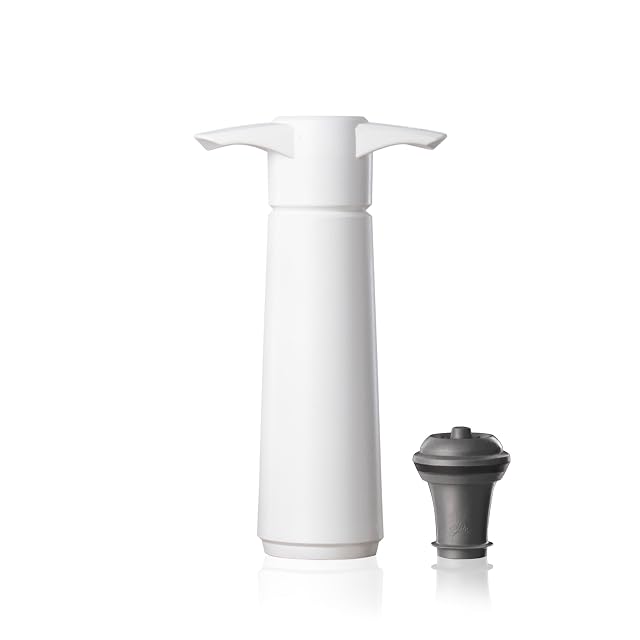
Pour first, then pump
A vacuum pump removes the air already inside an opened bottle — it does little for a bottle that’s still nearly full. Pour a glass or two first so there’s real headspace for the pump to work on.
Insert the stopper fully
A stopper that isn’t seated all the way into the bottle neck won’t hold a vacuum seal, however many times the pump is used. Push it in firmly before pumping.
Pump until resistance builds
Most pumps are built to resist further pumping once a vacuum forms — that resistance, not a fixed number of strokes, is the actual signal that the seal is working.
Store upright, not on its side
Once vacuum-sealed, keep the bottle upright rather than resting a stopper against the wine the way a cork-down storage position would for an unopened bottle — the stopper isn’t designed for extended liquid contact the way a natural cork is.
What we would not do
Expect a vacuum pump to meaningfully extend a nearly full bottle’s freshness. It’s a tool for a bottle that’s already been opened and partly poured, not a substitute for finishing what’s already been started.
What readers ask us
How do I know when a vacuum pump has reached a proper seal?
Most pumps, including Vacu Vin's, are designed to resist further pumping once a vacuum is reached — a noticeable increase in resistance is the practical signal, though there's no external gauge to confirm it visually.
Can a vacuum pump be used on a bottle with a screw cap instead of a cork?
No — the stopper is designed to seal against a standard cork-sized bottle neck. A screw-cap bottle can simply be resealed with its own cap, which already provides an airtight seal without a pump.
Last reviewed 25 August 2026