The general split
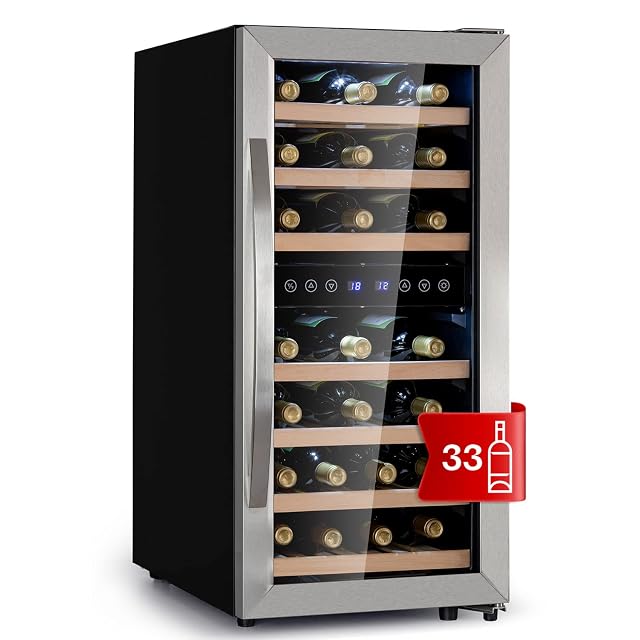
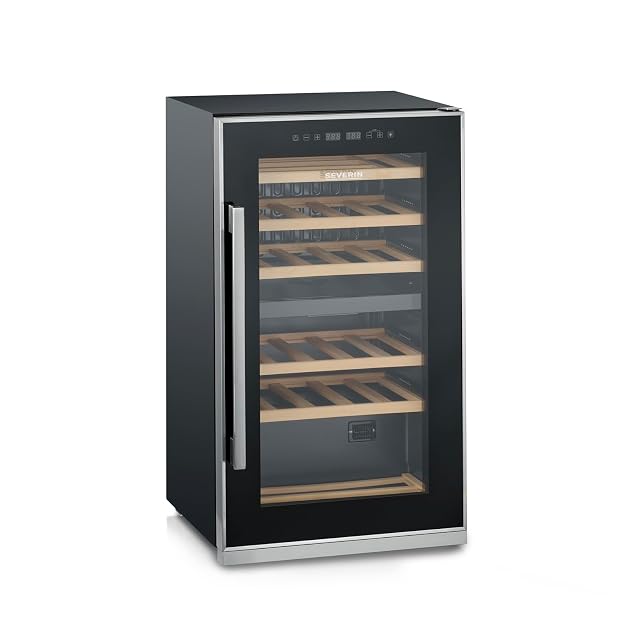
Lighter reds generally store and serve a little cooler than full-bodied reds; whites and sparkling wine sit at the colder end of most coolers’ ranges. A dual-zone cooler like the Severin SEVINZO 28 Duo, which states an upper zone of 5–12 °C (41 to 54 °F) and a lower zone of 12–18 °C (54 to 64 °F), is built around exactly this split.
Why a single setpoint is a compromise
A single-zone cooler holding everything at one temperature necessarily sits between what’s ideal for reds and what’s ideal for whites — workable, but not optimal for either if the collection is genuinely mixed.
Let the display settle, don’t chase it
A cooler’s display often shows the air temperature inside the cabinet, not the liquid temperature inside a given bottle. After changing a setpoint, give it real time — hours, not minutes — before assuming the bottles inside have caught up.
What we would not do
Treat a cooler’s displayed number as the bottle’s actual internal temperature moment to moment. Use a dedicated bottle thermometer if precise serving temperature genuinely matters for a specific occasion.
What readers ask us
Is it fine to serve wine straight from a single-zone cooler set to one temperature?
For a household drinking mostly one style, yes. For a mix of reds and whites, a single shared setpoint is a compromise on both — a dual-zone cooler solves this by holding two targets in one cabinet.
Does a wine cooler need to match serving temperature exactly?
Not exactly — many drinkers let a stored bottle warm slightly on the counter before pouring reds, or chill whites a touch further just before serving. The cooler's job is close, stable storage, not the final serving temperature to the degree.
Last reviewed 25 August 2026