Skip to content

Pouring a clean glass from a compact dispenser

Excess foam is rarely the machine's fault — it's usually glass angle, tap technique, or a keg that hasn't reached temperature yet.

Let the keg reach temperature first

A freshly inserted keg needs time to cool to the dispenser’s serving temperature — pouring immediately after insertion is the most common cause of an excessively foamy first glass.

Tilt, then straighten

Start with the glass tilted at an angle under the tap, and gradually bring it upright as it fills — this controls head formation the same way it does at a professional bar tap.

Open the tap fully, not partially

A partially open tap increases turbulence in the pour, which increases foam. A fully open tap, controlled by how long it’s held open rather than how far, generally gives a cleaner result.

Clean the line if pours stay foamy

If foam persists across multiple kegs after the temperature has settled, a buildup in the dispensing line is the likely cause — see our advice on cleaning a beer dispenser line.

What we would not do

Assume a foamy pour means the dispenser is faulty. In nearly every case it’s technique, keg temperature, or a line overdue for cleaning — genuine hardware faults are the less common explanation.

What readers ask us

Why does my dispenser pour mostly foam on the first glass after inserting a new keg?

A newly inserted keg usually hasn't reached the dispenser's target serving temperature yet, and the line may still have air in it from the swap — both settle down after the first pour or two, which is a normal part of changing kegs, not a fault.

Does the angle I hold the glass at actually matter?

Yes — starting with the glass tilted and gradually straightening it as it fills is standard technique for controlling head size, the same principle bartenders use at a tap, and it applies to a compact home dispenser just as much as a full bar setup.

Last reviewed 25 August 2026
What this takes for granted

Everything above works with what you already own. These are the products we would reach for, and each links to the full review rather than straight to a shop.

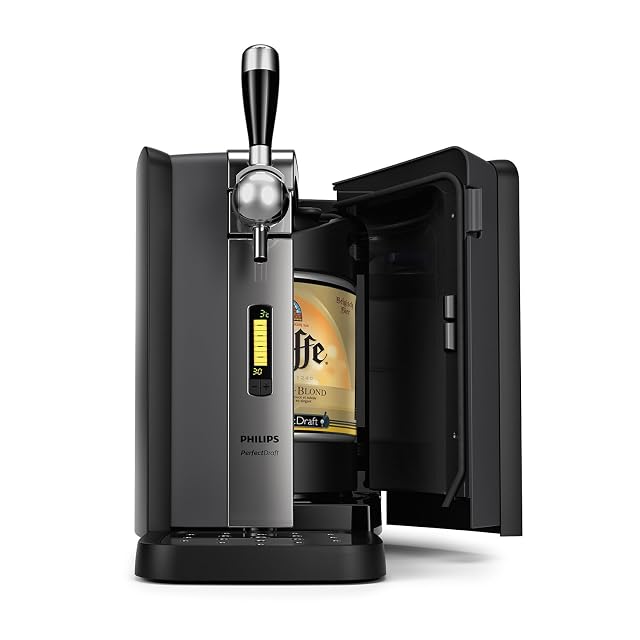
  • Philips PerfectDraft HD3720/25

    6 L sealed keg · PerfectDraft system · LED display

    A compact dispenser built around Philips' own 6-liter sealed keg system, with an LED display for temperature and remaining volume. The same ASIN is confirmed live with real stock on Amazon.de, .fr, .it and .es — the strongest cross-market match found in this family.

    Best for: A household that wants draft beer from a fridge-sized appliance without a CO2 cylinder or a commercial keg, and is comfortable with a closed keg catalog in exchange for that convenience.

    8.4/10

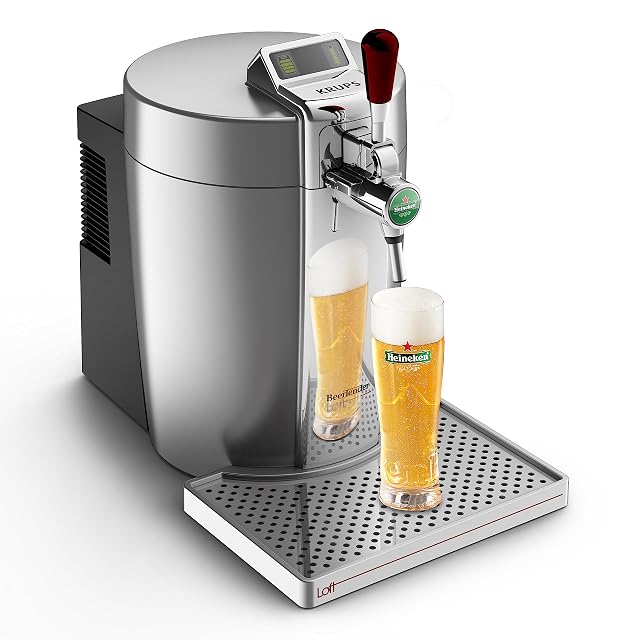
  • Krups Beertender Loft Edition

    5 L Heineken keg system · cools to 4 °C (39 °F) · 30-day freshness

    The official Heineken-licensed dispenser, built around a 5-liter sealed keg system with a stated 4 °C (39 °F) serving temperature and 30-day freshness once tapped. Confirmed on Amazon.de and .fr with real pricing, though noticeably more expensive than the H.Koenig universal-keg alternative in this family.

    Best for: A household committed to the Heineken beer family who values official licensing and wants concrete temperature and freshness figures over the lower price of a universal-keg alternative.

    8.4/10

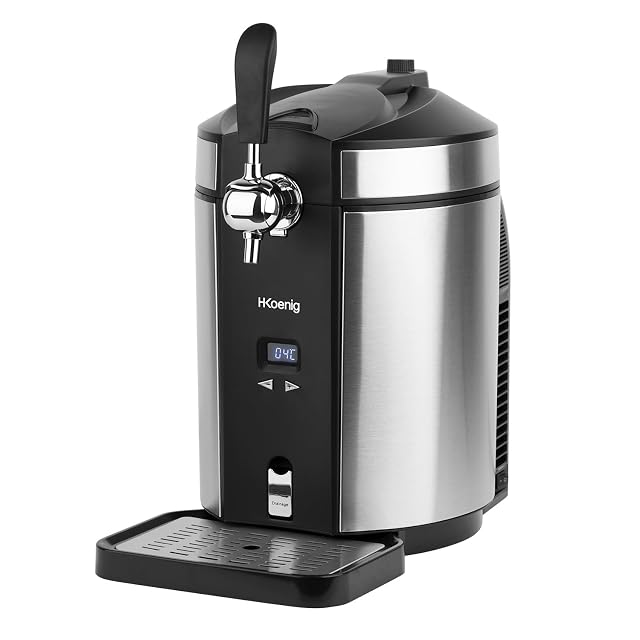
  • H.Koenig BW1880

    5 L universal kegs · pressurized or non-pressurized · 2–12 °C (36 to 54 °F)

    A stainless steel dispenser built for universal 5-liter kegs rather than one proprietary system, with adjustable cooling between 2 and 12 °C (54 °F). Confirmed live with real pricing on Amazon.de and .fr, at roughly half the price of the officially licensed Krups Beertender.

    Best for: A budget-conscious buyer who wants flexibility across multiple keg brands rather than a single licensed beer catalog, and is comfortable confirming keg compatibility themselves before buying.

    7.8/10