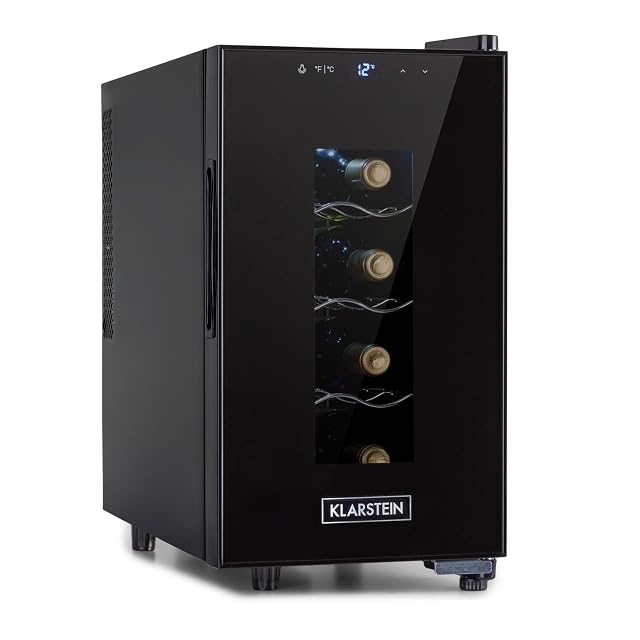
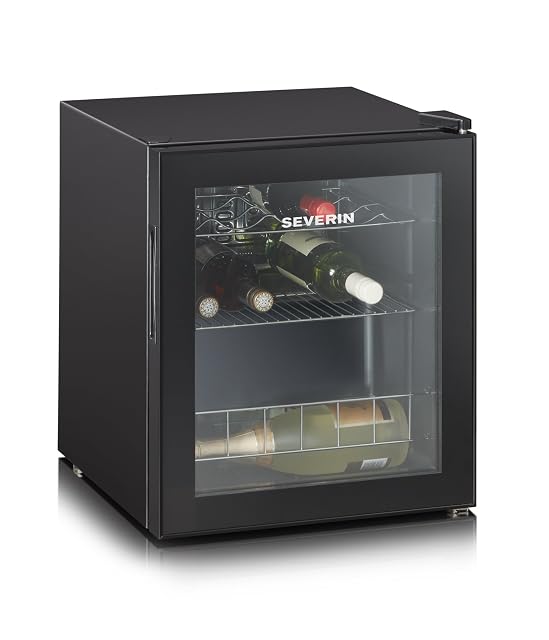
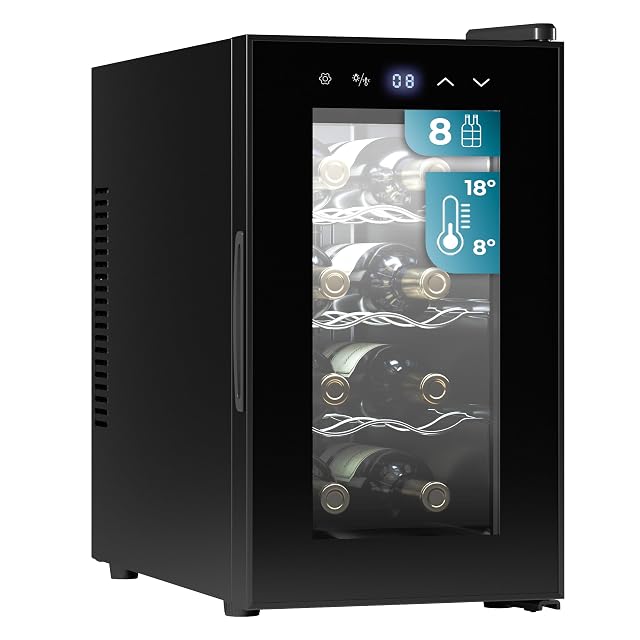
Cooling technology first, capacity second
A thermoelectric cooler is quieter and cheaper but tracks the room’s own temperature — in a warm kitchen it can sit several degrees above its display setpoint. A compressor cooler holds its target regardless, at a real cost in price and running expense. Check this before comparing bottle counts.
Where it will actually sit
A cooler destined for a warm room, a garage, or anywhere with real seasonal temperature swings needs compressor cooling to hold its range reliably. A cool, climate-controlled room can get away with a cheaper thermoelectric unit.
One zone or two
A single zone holds everything at one temperature — fine for a collection that’s mostly one style, or for short-term storage before serving. Once reds and whites genuinely need separate temperatures, a dual-zone cooler is worth the jump in price.
Check the published range against what you’ll actually store
An 11–18 °C (52 to 64 °F) range suits most reds and some whites; genuinely cold storage for crisp whites or sparkling wine needs a cooler whose range dips lower, ideally with a documented lower bound around 5 °C (41 °F).
What we would not do
Buy the cheapest cooler available without checking whether it publishes a cooling technology at all. A missing spec on a listing is itself a data point — it usually means the figure wouldn’t be flattering if published.
What readers ask us
Is a bigger cooler always the safer buy?
Not if the extra capacity goes unused — a larger cabinet costs more to buy and, with compressor models, more to run. Buy for the collection you actually have plus modest growth, not an aspirational maximum.
Do I need to know the cooling technology before buying?
Yes, if the cooler is going anywhere warm — a kitchen, a garage, near a window in summer. Thermoelectric coolers drift with room temperature; compressor coolers hold their target regardless. Several listings don't state which technology is used, so check directly if it isn't published.
Last reviewed 25 August 2026