One target temperature, and how evenly it holds it · review
Severin KS 9889 review
A 15-bottle, 46-liter compressor cooler with automatic defrost and a stated 43 dB noise level. The same ASIN and EAN are confirmed live on Amazon.fr, .de, .it and .es, though energy class G and 147 kWh/year running cost are worth weighing against the price.
Where the Cecotec and Klarstein coolers in this family rely on thermoelectric modules, the KS 9889 uses a compressor — the same technology found in larger fridges — which holds its temperature target regardless of how warm the surrounding room gets. That stability is the main reason to pay more for a compressor unit over a thermoelectric one at a similar bottle count.
The running-cost trade-off
Severin states an EU energy class of G and 147 kWh per year for this model. That is a genuine ongoing cost that a thermoelectric cooler of similar capacity would not carry to the same degree, and it is worth adding to the purchase price when comparing this cooler against cheaper alternatives in the same family.
What is actually published
Severin’s listing states a 43 dB noise figure and automatic defrost — both details that several competing coolers in this family leave unstated. The 4–18 °C (39 to 64 °F) range is also wider at the cold end than most thermoelectric rivals, useful for whites and sparkling wine stored closer to serving temperature.
Bottom line
The KS 9889 suits a buyer who has already decided that compressor stability matters more than upfront price, and who is comfortable with the running-cost trade-off that comes with an energy class G rating.
What works, and what does not
Strengths
Compressor cooling with a genuinely wide 4–18 °C (39 to 64 °F) range, colder than most thermoelectric rivals at this capacity
Automatic defrost, a detail several competing single-zone coolers do not mention
43 dB noise figure is actually published rather than left as a vague description
Same ASIN and EAN confirmed live with real stock on all four EU markets checked
Compromises
Energy class G with a stated 147 kWh/year is a real ongoing cost to weigh against the purchase price
15-bottle capacity still fills quickly once a few reds and whites are open at once
No independent long-term owner reports were available at the time of checking to confirm the compressor's durability
Specifications
Capacity
15 bottles (0.75 L), 46 L net
Zones
1
Temperature range
4–18 °C (39 to 64 °F)
Cooling technology
Compressor, with automatic defrost
Noise
43 dB, per the listing
Power
128 W
Energy class
G — 147 kWh/year stated running cost
Amazon reference
B00D1V4UE2 (identical ASIN and EAN 4008146004162 on DE/FR/IT/ES)
What readers ask us
Why is the Severin KS 9889 rated energy class G?
Compressor coolers with automatic defrost typically draw more power than thermoelectric units of similar size, and the EU energy label for this model states 147 kWh per year — worth factoring into the total cost of ownership alongside the purchase price.
Does automatic defrost affect the wine inside?
Severin's listing does not detail the defrost cycle's effect on internal temperature during the process. Automatic defrost mainly protects the cooling coil from ice buildup, which is a maintenance benefit rather than a change to how the wine itself is stored.
Our score
7.8/ 10
The buyer this one serves, among bar and wine appliances
Someone who wants a compressor cooler's temperature stability and a genuinely cold lower range, and is willing to pay more upfront and in running costs than a thermoelectric model.
What this one costs among bar and wine appliances
A reference exists on these Amazon stores: France, Germany, Italy, Spain, United Kingdom, United States. Listed is not the same as in stock — availability changes daily.
Specifications: the manufacturer sheet for bar and wine appliances and the matching Amazon product page. Prices and availability: Keepa. Every figure on this page names its source.
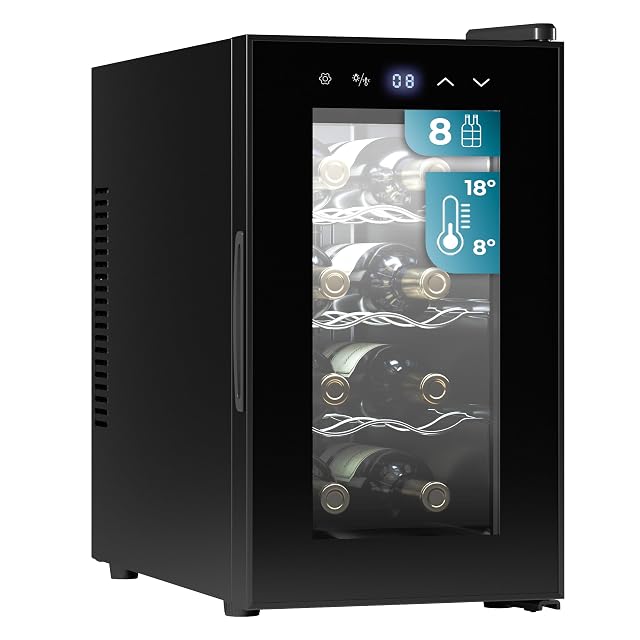
8 bottles · 1 zone · 8–18 °C (46 to 64 °F) · thermoelectric
An 8-bottle thermoelectric single-zone cooler with a touch control panel, interior LED and a non-toxic refrigerant gas stated on the listing. The same ASIN and EAN are confirmed live on Amazon.es, .fr, .it and .de.
Best for: A budget single-zone cooler for a cool room or a climate-controlled flat, where thermoelectric cooling's lower price outweighs its sensitivity to ambient heat.
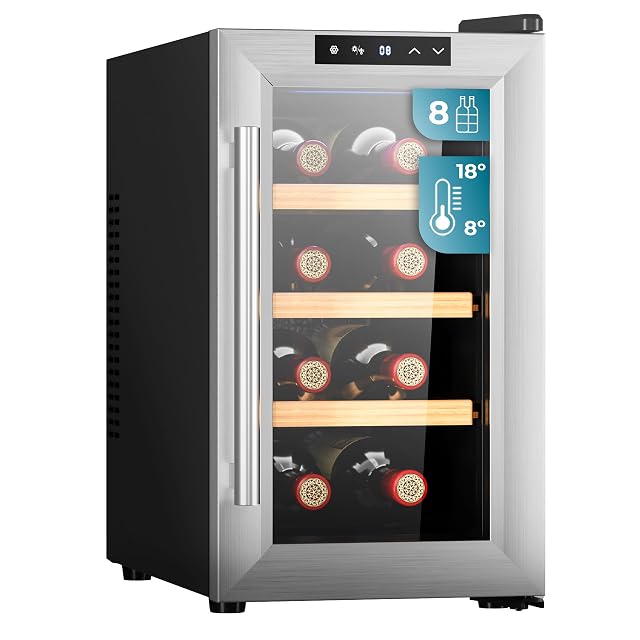
8 bottles · 1 zone · 8–18 °C (46 to 64 °F) · thermoelectric
The wood-finish variant of Cecotec's 8-bottle Bolero Grandsommelier 830, described on the listing as low noise and high performance. Same thermoelectric cooling and capacity as the CoolCrystal finish, confirmed on the same four EU markets.
Best for: The same cool-room, budget single-zone use case as the CoolCrystal finish, for a buyer who prefers a wood-look cabinet over a glass one.
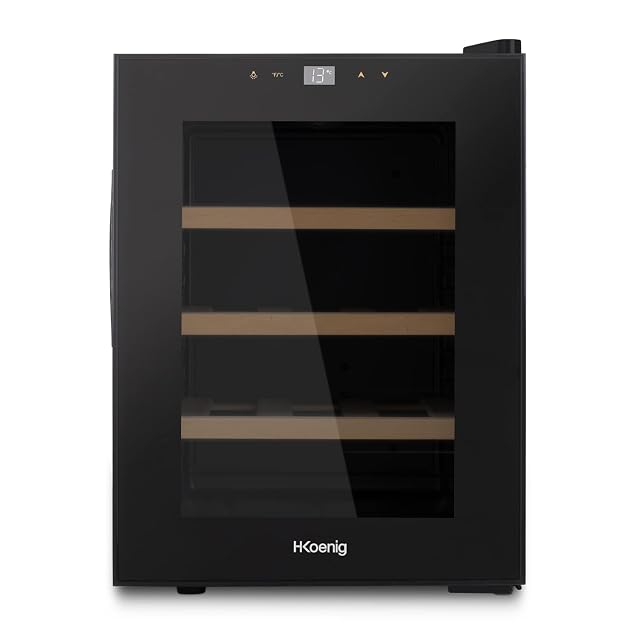
12 bottles · 1 zone · thermoelectric · stainless steel
A 12-bottle, 31-liter thermoelectric cooler in a professional-look stainless steel cabinet, with wood shelving and interior lighting. The temperature range differs slightly between markets on the listings checked, worth confirming before buying.
Best for: A buyer who wants a stainless steel, professional-styled cooler at 12-bottle capacity and is comfortable double-checking the exact temperature range on their own market's listing before ordering.