A wider temperature range than a wine cooler, by design · review
hOmeLabs 120-Can Beverage Refrigerator review
A 3.2-cubic-foot compressor beverage fridge for up to 120 cans, cooling down to 34 °F, with three removable chrome shelves and a published 288 kWh a year.
What it comes down to A plain, well-documented can fridge: 120 cans, 34 °F, a compressor and a yearly consumption figure. It is a beverage fridge, not a wine cabinet.
Three removable chrome shelves, reinforced glass door, LED light
17.3 × 18.9 × 33.3 in, 68.3 lb
A beverage fridge is not a wine cooler
The useful number here is the bottom one: 34 °F. Wine coolers stop at about 40–41 °F, because wine wants 45–64 °F, and they are built for steady humidity rather than fast pull-down. A can fridge is the reverse. If the bar holds both, it needs both.
The twin on this shelf
The Honeywell H115BCS publishes 17.3 × 18.9 × 33.1 in, 68.2 lb and 288 kWh a year. This one publishes 17.3 × 18.9 × 33.3 in, 68.3 lb and 288 kWh. Those are the same cabinet in every way a buyer can measure.
Availability
Read on October 29, 2026 at Amazon.com, for delivery to a US address: $289.99, in stock.
Stock and price both move without notice; the live price is at the top of the page.
Prices quoted in this text were read on October 29, 2026. The live price is at the top of the page.
What works, and what does not
Strengths
Cools to 34 °F, cold enough for beer and soda, which a wine cooler set to 41 °F at best is not
A yearly consumption figure, 288 kWh, about $49 a year at 17 cents per kWh
Compressor cooling, so it holds temperature in a garage or a warm basement bar
Compromises
No upper limit published, so it is not a wine cabinet: there is no 55 °F storage setting on the listing
Freestanding, with no front venting described: not for building in
No warranty term or noise figure on the listing
Its two closest on cost
Same shelf, nearest price — what the same spend buys instead.
It can chill bottles laid on its shelves, but it is built for cans at 34 °F and up. Long-term wine storage wants 50–57 °F and steady humidity, which is what the wine coolers on this site are for.
How many cans really fit?
The listing says up to 120 standard 12 oz cans across three shelves. Taller bottles and tall-boys cost space.
Is the Honeywell 116-can the same fridge?
Their published sizes, weights and yearly consumption are almost identical: 17.3 × 18.9 × 33.3 in and 68.3 lb here, 17.3 × 18.9 × 33.1 in, 68.2 lb and the same 288 kWh for the Honeywell. That suggests one factory; the listings do not say so.
Our score
7.4/ 10
A plain, well-documented can fridge: 120 cans, 34 °F, a compressor and a yearly consumption figure. It is a beverage fridge, not a wine cabinet.
The buyer this one serves, among bar and wine appliances
Specifications: the manufacturer sheet for bar and wine appliances and the matching Amazon product page. Prices and availability: Keepa. Every figure on this page names its source.
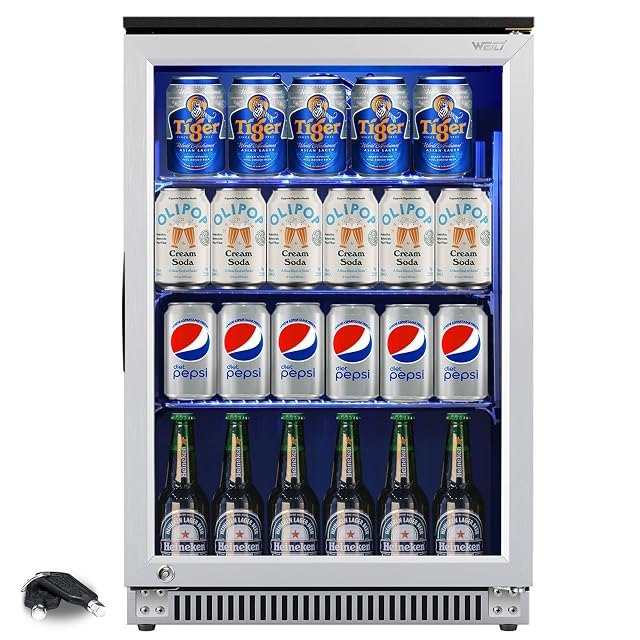
120 cans · 34–50 °F · front vent, built-in · compressor · 120 V · triple glazing
A 20-inch front-venting compressor beverage fridge for 120 cans, 34 to 50 °F, that can be built under a counter, with a triple-glazed door and a key lock.
Best for: A built-in can fridge in a kitchen island or a bar cabinet run
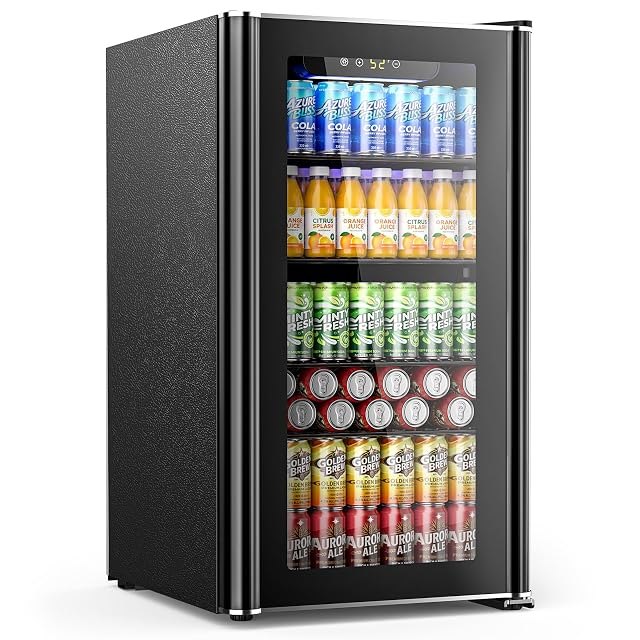
130 cans or 26 bottles · 3.2 cu ft · compressor · 115 V · 180 kWh/yr
A 3.2-cubic-foot compressor fridge sold for 130 cans or 26 wine bottles, with four adjustable wire racks and a published 180 kWh a year, whose listing gives two different temperature ranges.
Best for: A mixed home bar where a few bottles of wine share space with cans
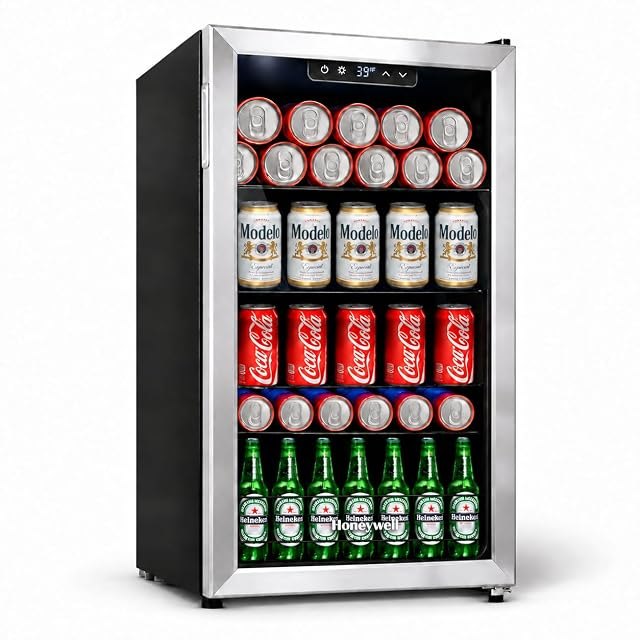
116 cans · 3 cu ft · triple-pane glass · 115 V · 288 kWh/yr · electronic lock
A 116-can beverage fridge with a triple-pane glass door, an electronic thermostat and slide-out coated shelves, whose listing calls it thermoelectric while publishing the weight and consumption of a compressor cabinet.
Best for: A low-cost can fridge for an office or a basement bar