A 3.2-cubic-foot compressor fridge sold for 130 cans or 26 wine bottles, with four adjustable wire racks and a published 180 kWh a year, whose listing gives two different temperature ranges.
What it comes down to Cheap to buy and the cheapest to run among the can fridges here, with racks for bottles too. Its listing cannot agree on its own lowest temperature.
17.32 × 19.29 × 30.79 in, 48.9 lb, 1-year warranty
The lowest running cost on this shelf
180 kWh a year against 288 for the hOmeLabs and the Honeywell. At 17 cents per kWh that is about $31 against $49. Over a decade, the difference is close to the price gap between the cheapest and dearest fridges here.
Two ranges
The title ends at 40 °F; the bullets start at 32 °F. Both stop at 61 °F. A fridge that really reaches 32 °F would be the coldest on this shelf, which is a claim worth checking with the seller rather than assuming.
Availability
Read on October 29, 2026 at Amazon.com, for delivery to a US address: $209.98, in stock.
Stock and price both move without notice; the live price is at the top of the page.
Prices quoted in this text were read on October 29, 2026. The live price is at the top of the page.
What works, and what does not
Strengths
The lowest yearly consumption of the can fridges here, 180 kWh, about $31 a year at 17 cents per kWh
Racks that take both cans and wine bottles
About $210, one of the cheapest compressor fridges on this site
Compromises
Two different temperature ranges on one listing
"Built-in" in the table with no front vent described: treat it as freestanding
A 61 °F ceiling and a 32 °F floor means it is neither a true wine cabinet nor a fast can chiller at the top of its range
Its two closest on cost
Same shelf, nearest price — what the same spend buys instead.
"Built-In/Freestanding" in the table; no front vent described
Warranty
1 year
Amazon reference
B0F18191JK
What readers ask us
Which temperature range is right?
The title says 40–61 °F and the bullets 32–61 °F. Read the lower figure as uncertain; the 61 °F ceiling is consistent across both.
Is it a wine cooler?
It is sold as both. Its range covers wine storage temperatures, but its racks are wire and its listing says nothing about vibration or UV glass, which the dedicated wine coolers on this site address.
Can it be built in?
The spec table says built-in or freestanding, but no front vent is described. Without one, the safe choice is freestanding with rear clearance.
Our score
7.4/ 10
Cheap to buy and the cheapest to run among the can fridges here, with racks for bottles too. Its listing cannot agree on its own lowest temperature.
The buyer this one serves, among bar and wine appliances
A mixed home bar where a few bottles of wine share space with cans
Specifications: the manufacturer sheet for bar and wine appliances and the matching Amazon product page. Prices and availability: Keepa. Every figure on this page names its source.
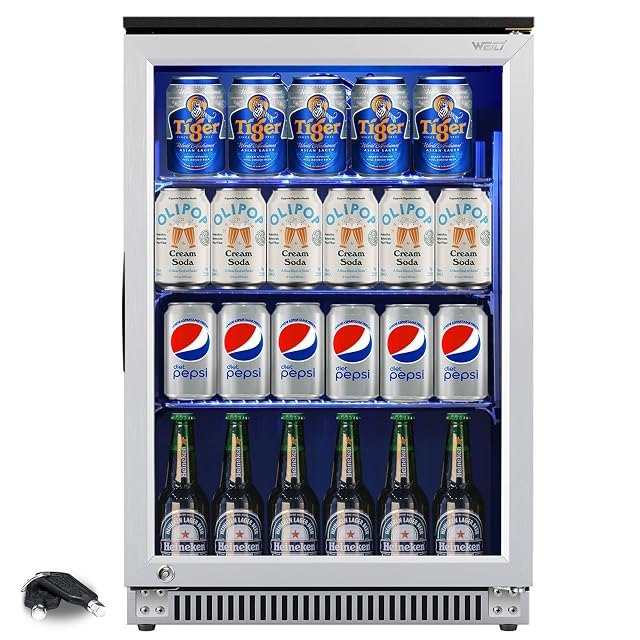
120 cans · 34–50 °F · front vent, built-in · compressor · 120 V · triple glazing
A 20-inch front-venting compressor beverage fridge for 120 cans, 34 to 50 °F, that can be built under a counter, with a triple-glazed door and a key lock.
Best for: A built-in can fridge in a kitchen island or a bar cabinet run
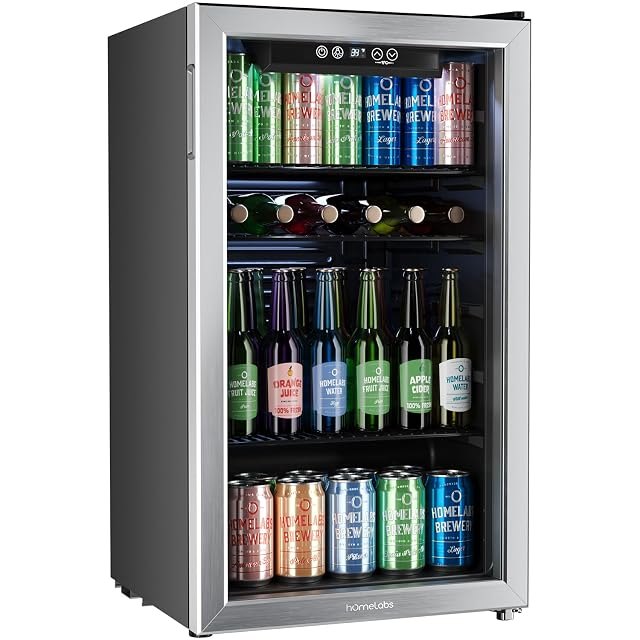
120 cans · 3.2 cu ft · down to 34 °F · compressor · 120 V · 288 kWh/yr
A 3.2-cubic-foot compressor beverage fridge for up to 120 cans, cooling down to 34 °F, with three removable chrome shelves and a published 288 kWh a year.
Best for: Keeping a home bar’s beer and soda at 34–40 °F
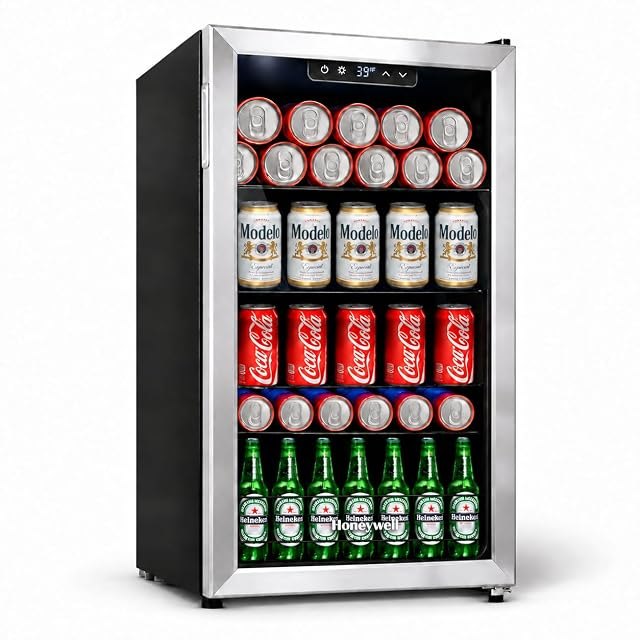
116 cans · 3 cu ft · triple-pane glass · 115 V · 288 kWh/yr · electronic lock
A 116-can beverage fridge with a triple-pane glass door, an electronic thermostat and slide-out coated shelves, whose listing calls it thermoelectric while publishing the weight and consumption of a compressor cabinet.
Best for: A low-cost can fridge for an office or a basement bar