Skip to content

The best wine preservation pump for 2026

These solve the same problem in opposite ways. One removes air from an already-opened bottle; the other keeps air out entirely by pouring through a stopper without removing the cork. The right choice depends on how the bottle is actually used, not just budget.

The cheap, simple default

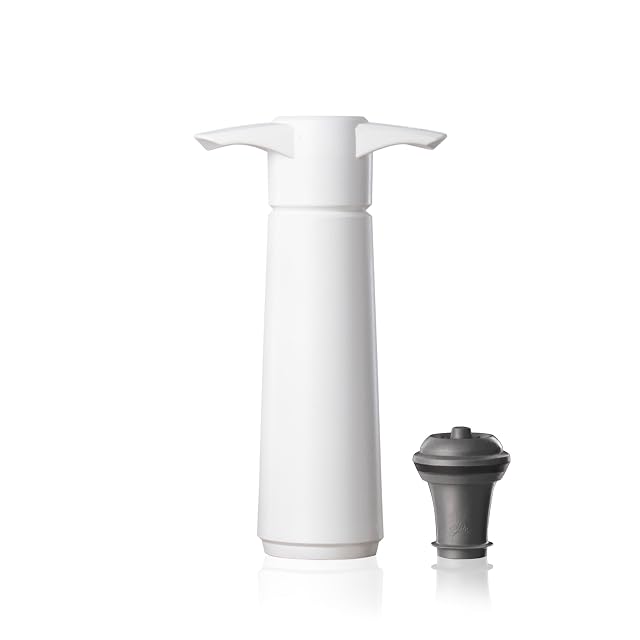
The Vacu Vin Wine Saver Pump is first for a household opening a bottle every few days — a one-time purchase, reusable indefinitely, at roughly 12 €. It works best once real headspace exists in the bottle.

Long-term preservation, at a real cost

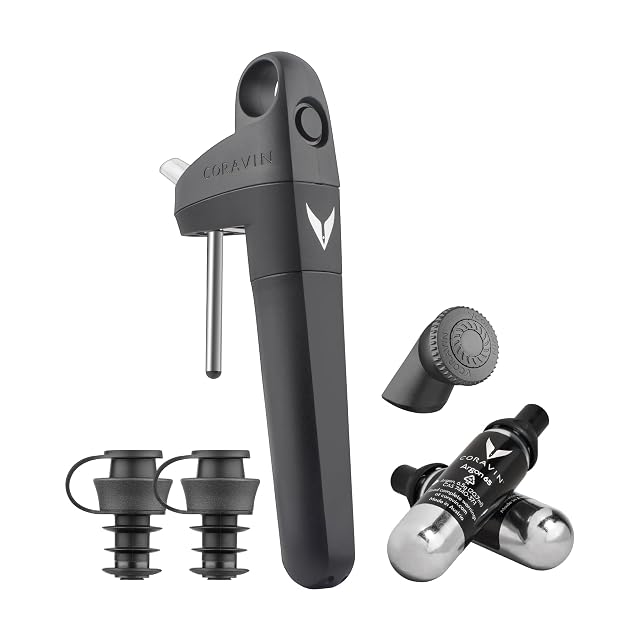
The Coravin Pivot+ is the pick for pouring small amounts from the same bottle repeatedly over weeks — its gas-injection system never lets air into the bottle in the first place, extending preservation well past what a vacuum pump can manage. Budget for argon capsule refills beyond the two included.

What we would not do

Buy the Coravin system for a bottle that gets finished within a few days of opening — the Vacu Vin pump does that job for a fraction of the price. Coravin’s real advantage only shows up over genuinely long preservation windows.

Which cabinet suits your collection?

You finish the bottle within two or three days
A simple vacuum pump is plenty and costs little.
You want to keep a week or more
You need an inert gas system, which protects without agitating the wine.
You serve by the glass regularly
A gas-based serving system, drawing without uncorking, becomes relevant despite its price.
You mostly drink sparkling wine
A vacuum pump is counterproductive: it removes the gas. You need a pressure stopper.

Picking by what you store

One glass in the evening

The commonest case: preserving what is left until tomorrow. A simple pump answers it.

Tasting several wines

Opening three bottles to compare means being able to keep them. That is where inert gas makes full sense.

Fine wines

A great wine oxidizes quickly and copes badly with agitation. Inert gas is clearly preferable to vacuum.

Sparkling wine

The subject is reversed: keep the pressure, do not remove air. A lever stopper does the job.

The few numbers that decide it

Vacuum or inert gas
Vacuum removes air but agitates the wine and carries aromas away; inert gas forms a screen without removing anything. The second method is gentler and more effective over time.
Stopper sealing
The weak point of every vacuum pump: the vacuum leaks away slowly. A tired stopper preserves nothing while giving the illusion of doing so.
Recurring cost
A pump costs nothing to use; a gas system consumes cartridges. The sum depends on how many bottles are genuinely concerned.
How much wine is left
The more wine remains, the easier preservation is. On a last glass, no method works miracles.

Which number for which collection

What you are keepingThe methodIts limit
A simple wine, two daysVacuum pumpThe vacuum leaks away
A fine wine, a weekInert gasA cost per use
A sparkling winePressure stopperDoes nothing against oxidation
A last glassDecant into a smaller vesselYou need a suitable bottle

The traps to dodge

Pumping a sparkling wine
The pump removes exactly what makes the bubble. Sparkling wine needs a stopper that holds pressure in, not one that lets it out.
Believing the vacuum lasts
The vacuum degrades within days on almost every stopper. Re-pumping regularly is part of the method.
Keeping the bottle at room temperature
Preservation depends first on cold. A vacuum-sealed bottle left in a warm room keeps less well than one simply re-corked in the fridge.
Expecting miracles from a last glass
The ratio of air to wine decides everything. When one glass remains, decanting into a small full bottle is better.

By the kind of host you are

The everyday drinker
A simple pump and the fridge: enough, immediate, with no recurring cost.
The fine wine lover
An inert gas system, kept for the bottles that deserve it.
The curious comparer
Several stoppers and inert gas: that is what lets you open three bottles without losing two.

Care, servicing and how long it keeps going

These are simple objects whose whole performance rests on the seal. A stopper whose rubber has hardened no longer holds vacuum with nothing to say so, and you believe you are preserving when you have stopped.

  • Rinse and dry stoppers after use: dried wine sticks and attacks the seal.
  • Replace stoppers whose rubber has hardened or cracked.
  • Test the seal from time to time: a stopper that pulls out with no resistance was no longer holding.
  • On a gas system, check cartridge dates and that they are properly seated.

Safety

Few risks, except on cartridge-based gas systems.

  • Do not pierce or heat a gas cartridge.
  • Store cartridges out of children's reach and away from heat.
  • Do not force a stopper onto a chipped neck.
  • Do not use a pump on a cracked bottle.

Prices quoted in this text were read on 2026-08-25. The live price is at the top of the page.

Our choices, and what drove them

  1. Vacu Vin Vacu Vin Wine Saver Pump

    Vacuum pump + 1 stopper · reusable · ≈10-day freshness claimed

    The original Vacu Vin vacuum pump, drawing air out of an opened bottle through a rubber stopper. No batteries, no gas capsules, and the cheapest preservation product confirmed in this comparison. Confirmed live with real pricing on Amazon.de and .fr.

    Best for: A budget-conscious buyer who opens a bottle every few days and wants a cheap, reusable, no-consumables way to keep it drinkable a little longer — not someone pouring small amounts from the same bottle over several weeks.

    7.5/10

    ≈ $21

  2. Coravin Pivot+

    Argon gas system · up to 4 weeks · includes aerator, 2 stoppers, 2 capsules

    A gas-injection preservation system that pours through a Pivot stopper without removing the cork, keeping wine fresh for up to 4 weeks per Coravin's own claim. The bundle includes an aerator, two Pivot stoppers and two Pure argon capsules. Confirmed live with a real price on Amazon.fr.

    Best for: Someone who regularly pours small amounts from expensive or special bottles over several weeks, and values the longer preservation window enough to justify the higher upfront cost and ongoing capsule expense.

    8.7/10

What readers ask us

Which one lasts longer once a bottle is opened?

Coravin's argon gas system claims up to 4 weeks; Vacu Vin's vacuum pump claims roughly 10 days. That gap is the core trade-off against Coravin's much higher price and ongoing capsule cost.

Does the Vacu Vin pump work on a nearly full bottle?

Less well — its mechanism depends on removing air already inside the bottle, and a nearly full bottle has little air to remove. It works best once a glass or two has already been poured.

How long does wine keep once opened?

It depends on the wine, how much is left and the cold, far more than on the stopper used. No method freezes a wine; they slow oxidation to varying degrees.

Is vacuum better than gas?

Inert gas is generally gentler and more effective over time, because it removes neither aromas nor dissolved gas. Vacuum remains simpler and free of recurring cost.

Should red wine go in the fridge?

After opening, yes: cold slows oxidation. You simply take it out an hour before serving again.

Is the original cork enough?

It closes but does not protect: the air stays in the bottle. Better than nothing, worse than a preservation system.

Can an already oxidized wine be saved?

No: these methods slow oxidation, they do not reverse it. A wine that has turned does not come back.

Does decanting work?

Yes, and it is often the most effective method for a last glass: a small bottle filled to the brim leaves very little air in contact.

Each cabinet, and the collection it fits

Vacu Vin 08542606 · $21

Made for: A budget-conscious buyer who opens a bottle every few days and wants a cheap, reusable, no-consumables way to keep it drinkable a little longer — not someone pouring small amounts from the same bottle over several weeks.

Where it wins: No batteries, no consumable gas capsules — the pump and stopper are the entire cost, reused indefinitely

Where it loses: Only works on a bottle that still has meaningful headspace — it does not help once a bottle is already nearly full and freshly opened, since there's little air to remove

Read the full review →

Coravin Pivot+

Made for: Someone who regularly pours small amounts from expensive or special bottles over several weeks, and values the longer preservation window enough to justify the higher upfront cost and ongoing capsule expense.

Where it wins: Up to 4 weeks of stated preservation, several times longer than a vacuum pump's roughly 10-day claim

Where it loses: A genuine ongoing cost once the two included argon capsules are used — refill capsules are a recurring purchase

Read the full review →

What each band of spending gets you

What goes with it

Spares and fittings from the same aisle, at the price we noted. Check they match the cabinet you choose before you order: it depends on the model and the part number, which the listing states.

  • Vacu Vin 8875606 · Vacuum wine stoppers — Set of 2 · BPA-free · fits Vacu Vin pump systems
  • ERHIRY 8541916744 · Vacuum wine stoppers — 2 press-to-seal stoppers, 304 stainless center shaft, up to 16 days, leakproof on its side, fits ~18.5 mm (0.73 in) openings, not champagne, 3-year warranty · $13
  • BTGLLAS SDF465 · Wine & tasting glasses — Set of 12 lead-free small wine glasses, 4 oz/120 ml pour and 5 oz/150 ml brim, height 5.6 in, top and bottom diameter 2.3 in, max diameter 2.5 in, dishwasher safe, 1-year free exchange · $26
  • Gusto Nostro Not stated by the maker · Wine & tasting glasses — White marble freezable wine glass chiller holder with 2 unbreakable stainless steel stemless wine tumblers · $55

If you want it in a sentence

Pairings worth a look

One against one, already written up, for two cabinets from this guide or this aisle.

How this page was put together

Every cabinet here comes from the catalog this site keeps. Specifications are those the manufacturer states and those printed on the Amazon listing; prices are the Keepa reading for the date below, and both change. Ranking rests on declared specifications, on stated strengths set against stated limits, and on price. No item here has been used in person, and nothing on the page suggests it has.

Last checked on

The tool we use ourselves

Chosen your tool? Now buy it at the right price.

Wine coolers and built-in cellars swing by fifty dollars or more across the year, and the biggest "discounts" often land at prices the same model sold for six weeks earlier. UniverTrack tracks the real price history across retailers, spots fake reductions, and alerts you when it is genuinely the moment to buy.

Real price historyBuy-now alertsAI buying assistant
Try free for 14 days →
No commitment · Cancel in one click · 5 languages