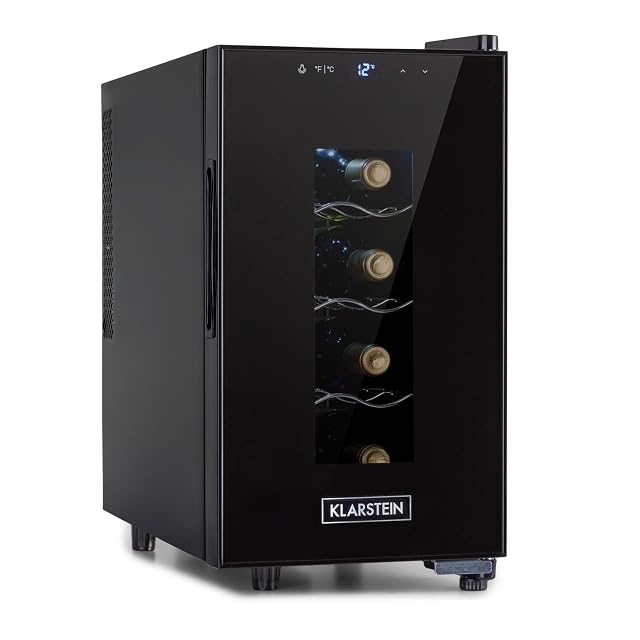
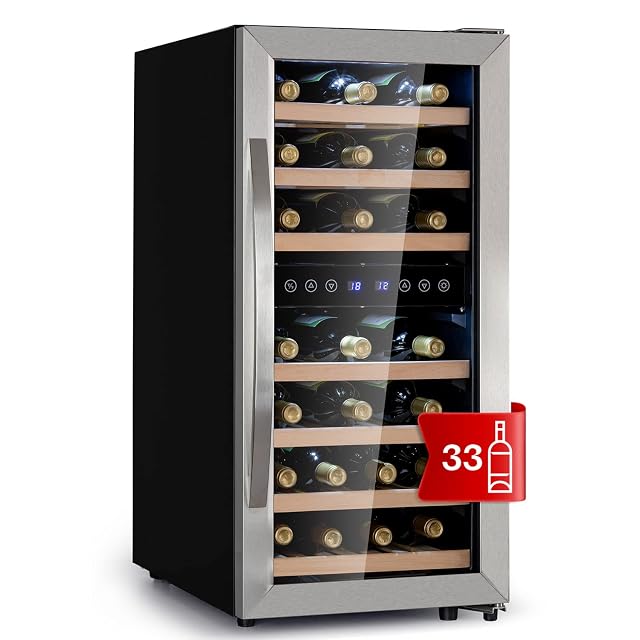
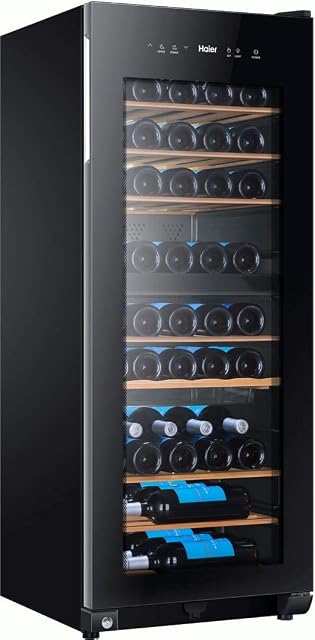
Measure the space before the bottle count
Check the actual width, depth and height available, including door swing clearance, before comparing capacity figures — a 33-bottle cooler that doesn’t fit the space is worse than an 8-bottle one that does.
Freestanding units need real ventilation clearance
Unlike built-in coolers, freestanding units vent from the back or top and need genuine clearance there — boxing one into a tight space without checking this risks overheating and reduced compressor life.
Consider growth, but don’t over-buy
Sizing for realistic growth over the next few years makes sense; sizing for a maximum aspirational collection that may never materialize means paying for and housing capacity that sits empty.
Weight matters for larger coolers
A 41- or 53-bottle cooler, full, is genuinely heavy — check that the intended floor or counter surface can support it before committing to a larger model.
What we would not do
Buy based on bottle count alone without checking both the footprint and the ventilation clearance a specific model actually needs. Both numbers matter as much as capacity.
What readers ask us
How much clearance does a freestanding cooler actually need?
This varies by model, but freestanding coolers generally need real clearance at the back or top for the compressor or thermoelectric module to vent — check the manufacturer's specific clearance figures rather than assuming a snug fit is fine.
Can a small cooler be upgraded later instead of buying a bigger one now?
Yes, and it's often the more sensible approach — an entry-level cooler is a modest investment, and upgrading once the collection genuinely outgrows it avoids paying for unused capacity for years.
Last reviewed 25 August 2026