A self-contained cabinet needs fridge-like clearance
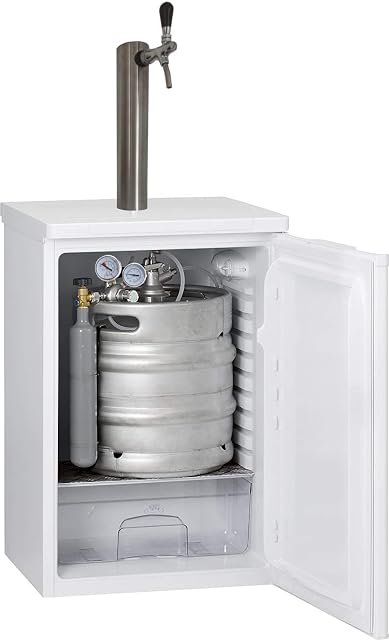
A unit like the Westerbarkey kegerator is essentially a specialized refrigerator — plan clearance around it the same way you would for a standard fridge, plus room for the dispensing column on top.
A pass-through system needs keg storage elsewhere
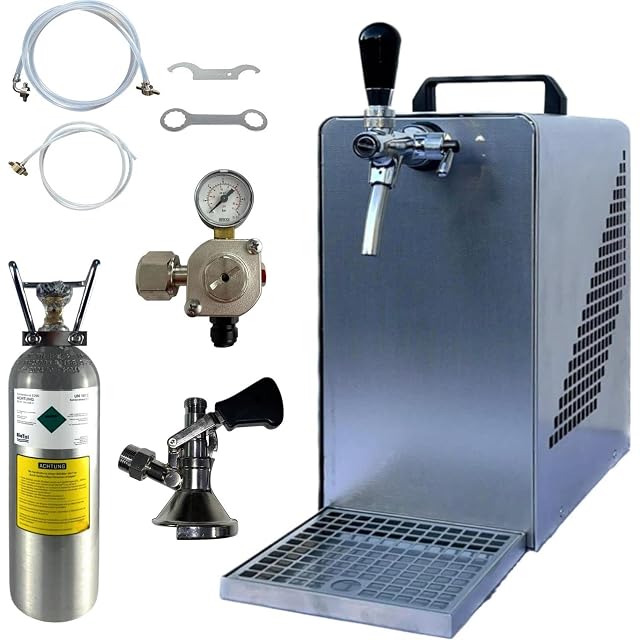
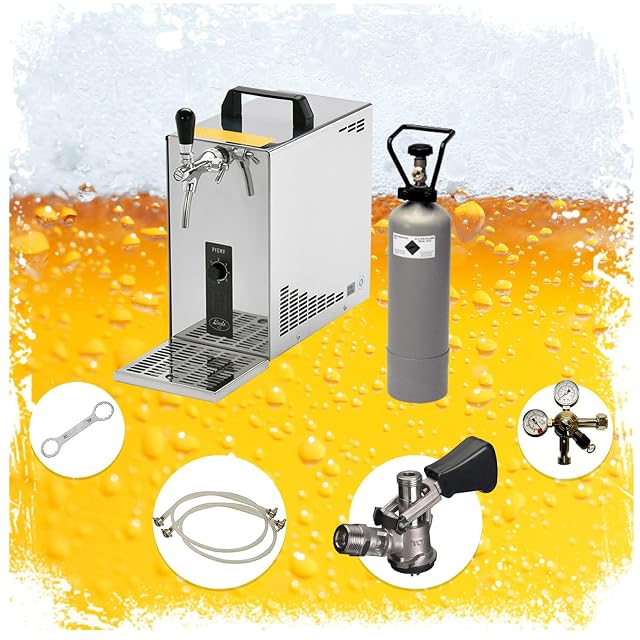
Units like the BieTal or PYGMY coolers don’t store the keg internally — the keg needs its own cool space, typically a cellar, garage, or spare fridge, which is a real space commitment separate from the cooling unit itself.
CO2 cylinders need their own footprint
A large refillable CO2 cylinder is bulky and needs genuine floor or cabinet space of its own, distinct from both the cooler and the keg — factor this in for a kegerator setup using a large-format gas supply.
Plan for keg delivery and swap access
Beyond the footprint of the equipment itself, consider how a full keg — genuinely heavy at 20-30 L — will physically get into position, and whether there’s room to manoeuvre it during a swap.
What we would not do
Plan a kegerator setup around the cooling unit’s footprint alone. The keg’s storage space and the CO2 supply’s footprint are real, separate space requirements that are easy to overlook until the equipment actually arrives.
What readers ask us
Does a pass-through cooler save space compared to a full cabinet?
It can, since there's no need for a cabinet large enough to store the keg — but the keg still needs its own cool storage space somewhere, such as a cellar or a separate fridge, so the total footprint isn't necessarily smaller.
How much clearance does a self-contained kegerator cabinet need?
Similar to a standard refrigerator — check the manufacturer's specific figures for rear ventilation clearance, and account for the additional space a dispensing column and CO2 cylinder need on top of or beside the cabinet.
Last reviewed 25 August 2026