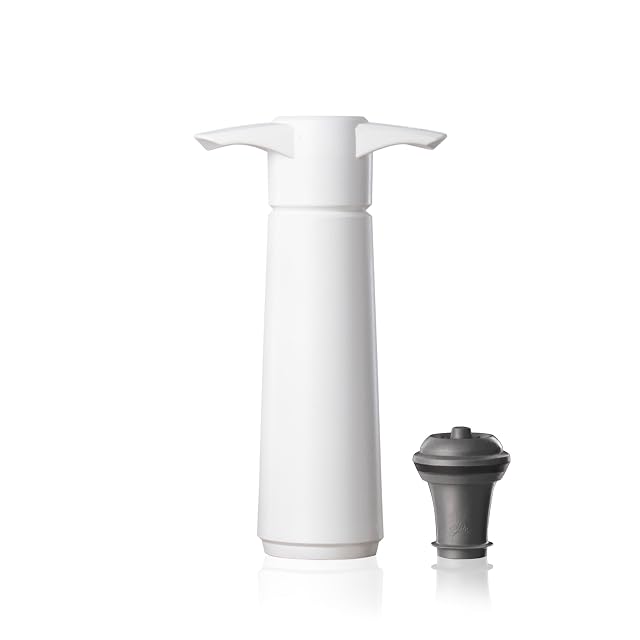
Check for wear before assuming the pump has failed
If pumping no longer builds resistance, the stopper — not the pump — is the more likely cause. Rubber and plastic stoppers wear and lose their seal over repeated use long before most pumps mechanically fail.
Keep a spare or two on hand
A household opening several bottles at once needs more than the single stopper typically included with a pump — a small set of spares avoids being caught short mid-use.
Stick to the matching brand’s stoppers
Stopper systems are generally built for their own brand’s pump — a mismatched stopper from a different maker may physically fit while not sealing reliably, undermining the whole point of the pump.
Clean stoppers between uses
Wine residue left on a stopper can affect both its seal and hygiene over repeated use — a quick rinse and dry between bottles keeps it performing as designed.
What we would not do
Replace an entire vacuum pump when the stopper is the actual point of failure. Stoppers are the cheaper, more frequently worn part — check and replace them first.
What readers ask us
How do I know when a stopper needs replacing?
A stopper that no longer holds resistance when pumped, or that visibly deforms or cracks, has reached the end of its useful life — replacing it is cheaper than a new pump and solves the same problem.
Can stoppers from a different brand be used with a Vacu Vin pump?
Compatibility isn't guaranteed across brands — Vacu Vin's own stoppers are built specifically for its own pump systems, and a differently sized or shaped stopper from another maker may not seal reliably even if it appears to fit.
Last reviewed 25 August 2026