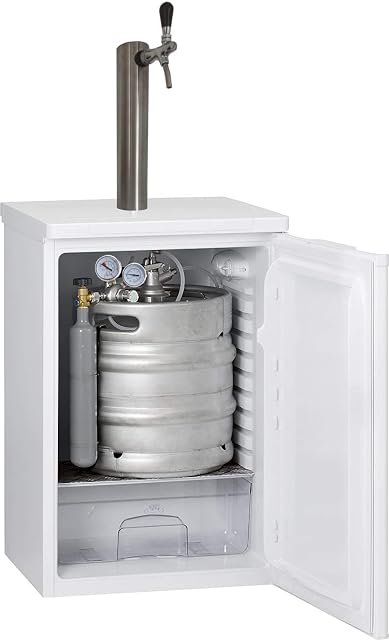
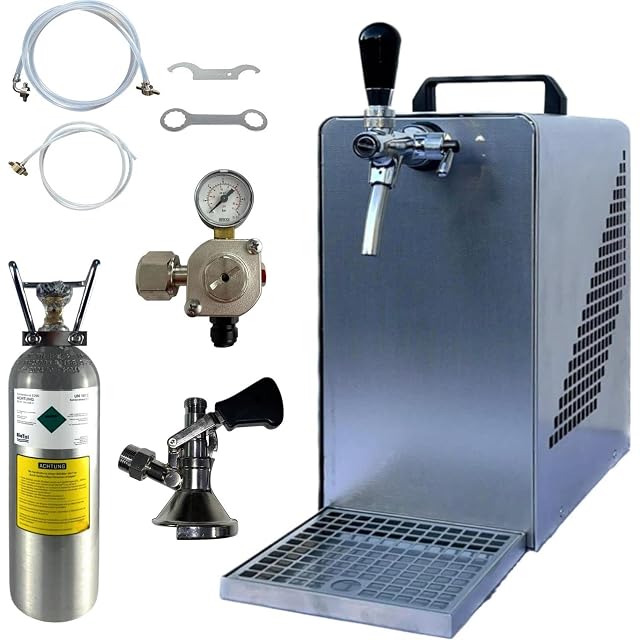
Clean at every keg change, not on a calendar
Tying line cleaning to consumption rather than a fixed monthly schedule is the guidance most manufacturers actually give — heavy use needs more frequent cleaning than occasional use, regardless of how much time has passed.
Use a formula built for the job
A chlorine-free, alkaline concentrate built specifically for beer lines — like KaiserRein’s — is designed not to leave a residue that affects taste, unlike a generic household cleaning chemical.
Rinse thoroughly before the next pour
Any cleaning solution needs a full rinse cycle afterward — residual cleaner in the line is as much a taste problem as the buildup it was meant to remove.
Compact dispensers have their own routine
Sealed-keg systems like PerfectDraft or Krups Beertender typically specify a simpler, manufacturer-defined cleaning process for the dispenser head itself, distinct from the full-line cleaning a kegerator with external tubing needs.
What we would not do
Skip line cleaning because the beer “still tastes fine.” Residue affects taste and head gradually enough that the change is easy to miss without a direct comparison to a freshly cleaned line.
What readers ask us
How often should a beer line actually be cleaned?
Tie the schedule to keg changes rather than a fixed calendar interval — a dispenser used heavily needs more frequent cleaning than the same model used occasionally, which is the guidance most manufacturers actually give.
Can a compact dispenser like PerfectDraft use the same cleaning products as a full kegerator?
Not necessarily — compact sealed-keg systems typically have their own, simpler manufacturer-specified cleaning routine, while concentrated cleaners like KaiserRein's are sized and formulated for full dispensing systems with external lines and taps.
Last reviewed 25 August 2026